Key Takeaways from Don’t Kill the Messenger Podcast with Kevin Goetz
For over three decades, Donald Petrie has been Hollywood’s master of romantic comedy, launching careers and creating beloved films that have grossed hundreds of millions worldwide. From discovering Julia Roberts in Mystic Pizza to directing Sandra Bullock in Miss Congeniality and pairing Jack Lemmon with Walter Matthau in Grumpy Old Men, Petrie’s track record speaks for itself. In a revealing conversation on Kevin Goetz’s podcast Don’t Kill the Messenger, the American Film Institute Fellow shared the principles and insights that have kept him at the forefront of comedy filmmaking.
Family Legacy Builds Foundation for Excellence
Petrie’s approach to filmmaking stems directly from his upbringing as the son of Emmy-winning director Daniel Petrie Sr. and pioneering producer Dorothea Petrie. The family’s guiding principle, encapsulated in the acronym “CBB” (Could Be Better), represents more than perfectionism: it’s a commitment to craftsmanship that permeates every decision.
This is a collaborative art, and my dad used to call it making it director-proof. Surround yourself with the best people you can. The most wonderful actors, producers, writers, cinematographers, composers, editors, assistant directors…hugely important. Production design, casting. Well, of course, they say in Hollywood, casting, casting, casting. And I’ve been privileged, honored to work with some of the best actors in the business and some of the best producers, writers, cinematographers, and on and on.
The respect for talent and collaboration became the cornerstone of Petrie’s career, influencing how he works with everyone from A-list stars to crew members.
The Petrie family’s integrity in Hollywood is legendary. As Kevin Goetz notes, “everybody in the business, you mention the Petrie name and they say kind, decent, the greatest of integrity.” This reputation wasn’t accidental; it was built through decades of treating people with respect and maintaining professional standards even when industry pressures suggested otherwise.
Discovering Stars Before They’re Stars
Petrie’s ability to spot talent has become part of Hollywood folklore. His discovery of Julia Roberts for Mystic Pizza reveals his casting philosophy: looking for actors who bring something unexpected to familiar material.
“She had to be brazen, bravado, and yet the most vulnerable of the three,” Petrie recalls about Roberts’ character. “You could pull off one or the other. But getting that combination of sexy, bravado, and yet she’s the one who’s scared…when Julia came in and read…I breathed this sigh of relief.”
This same instinct served him well when casting Brad Pitt in The Favor, before Thelma and Louise was released. Petrie’s insight: “You could have a line in a script and 10 actors reading that line would all read it pretty much the same way. And those two, Brad Pitt, Julia Roberts, people like that, it would be different. There’s a uniqueness about them, there’s unpredictability about them.”
The lesson for filmmakers: look for actors who bring something personal and unexpected to the material, not just those who can deliver lines correctly.
The Comedy Director’s Mindset
Petrie’s approach to comedy direction reveals a sophisticated understanding of audience psychology. His work with Jack Lemmon and Walter Matthau on Grumpy Old Men shows the value of understanding each actor’s working method: “Jack and Walter were better together than apart because Walter was never the same twice. And Jack was so specific that Walter yanked Jack out of whatever he had planned. And Jack grounded Walter.”
This philosophy extends to shooting for the editing room: “If I get a perfect performance that I think is spectacular, I’ll shoot another. Let’s do one bigger. Let’s do one smaller. Let’s try something different. Especially in comedy, what may be too much in one scene is not enough in another.”
Audience Testing as Creative Partner
Few directors embrace audience research as enthusiastically as Donald Petrie. His collaboration with audience testing expert Kevin Goetz has yielded crucial insights that improved several of his most successful films.
The most dramatic example came from Grumpy Old Men, where test screenings revealed a fundamental structural problem:
“When I did that opening, I guess the audience believed too strongly that it was a drama. I’m opening at a funeral. Everyone’s somber. Then, when it was a flashback and you had ‘morning dickhead,’ ‘morning moron,’ not a single laugh. It took me half an hour to get a laugh out of the audience. We lifted that whole opening off. What I did was I had to let the audience know it’s okay to laugh from moment one.”
Petrie’s solution was elegant and instructive. He replaced the somber opening with snow-covered Minnesota landscapes set to “Heat Wave,” immediately signaling the film’s comedic intentions.
For Miss Congeniality, audience feedback led to reshooting the ending. The original conclusion included a reveal about Michael Caine’s character that tested poorly with gay audiences. “They said, we finally have an unapologetically gay man in a movie played by Michael Caine, and then you realize they only really like him after it’s revealed he’s not gay.” The revised ending focused on Sandra Bullock and Candice Bergen, creating a stronger emotional payoff.
Petrie’s philosophy about testing reflects his broader collaborative approach:
We don’t know everything. As a director, yes I am an audience of one and I have to be the final arbitrator. However, when I’m shooting, I shoot for the editing room. Testing, being able to watch an audience, hear an audience tells you much more about how you’re going to complete editing your film. Testing is what told me that I had to completely change the beginning of Grumpy Old Men. Testing is what told me I had to change the ending of Miss Congeniality.
The Miss Congeniality Formula
Petrie’s transformation of Miss Congeniality from pageant spoof to action-comedy hybrid reveals his strategic thinking about genre expectations. When hired as a replacement director, he immediately reconceptualized the project:
“You don’t make a comedy about pageants, you treat a pageant real and it will spoof itself. Whereas the movie I wanna make is Lethal Weapon, and Sandy, you’re Mel Gibson, this tough as nails, a little bit crazy. Shoot first, ask questions later. That’s the character I need. You know, somebody who has subjugated every female bone in her body to do this man’s job in a man’s world who then has to go undercover in the pageant.”
This directive to Sandra Bullock wasn’t just character direction, it was genre repositioning. Petrie grounded the comedy in a recognizable action movie framework and created something audiences could immediately understand while still delivering unexpected moments.
His attention to character specifics extended to physical comedy: telling Bullock to “walk like you’ve got balls” and incorporating her natural snort-laugh into the character. These details, built from genuine observation of his star, added authenticity to the comedy.
Building Long-Term Career Success
Petrie’s longevity in Hollywood stems from his approach to collaboration and his willingness to learn from each project. His work with below-the-line talent, cinematographers like Russell Carpenter and John Bailey, editors like Debra Neil Fisher, and production designers like David Chapman, demonstrates the value of building a reliable creative team.
His advice to young filmmakers reflects hard-won wisdom: “I’ve had students who direct a thing, everyone hates it, and they go, ‘that’s what I wanted. I wanted the audience to hate this.’ Well, good, you got what you asked for… But generally, the movies I make, I want to hit an audience.”
Petrie shares his approach to four-quadrant filmmaking: “I want to hopefully speak to everyone, and I don’t want to only make ’em laugh, I want to make ’em laugh, I want to make ’em cry. Hopefully, they realize something in themselves that they can relate to the characters in the movie.”
The Petrie Method
What emerges from this conversation with Kevin Goetz is a clear methodology for comedy success: start with strong collaborative relationships, cast actors who bring unexpected qualities to familiar roles, structure stories to establish genre expectations quickly, and use audience feedback to refine rather than completely reshape your vision.
For filmmakers at any level, Donald Petrie’s approach offers a proven roadmap: respect your collaborators, trust your audience, and never lose sight of the emotional truth at the center of even the most commercial entertainment. In an industry where comedy hits are notoriously difficult to predict, this methodology has proven remarkably reliable across four decades.
The full conversation between Donald Petrie and Kevin Goetz on Don’t Kill the Messenger provides even deeper insights into the director’s creative process and collaborative philosophy. For anyone serious about comedy filmmaking or understanding audience research, it’s essential listening.
Donald Petrie’s films, including Mystic Pizza, Grumpy Old Men, Miss Congeniality, and How to Lose a Guy in 10 Days, showcase the power of combining strong storytelling with careful audience testing. His collaboration with movie research expert Kevin Goetz demonstrates how audience research can enhance rather than compromise creative vision.
The full conversation between Donald Petrie and Kevin Goetz is available now.
For more information about Kevin Goetz:
Want to go deeper on audience insight and why it matters in today’s movie business?
Explore Audience360—Kevin Goetz’s hub for books, conversations, and tools that show how audience research shapes what gets made, marketed, and remembered.
Books
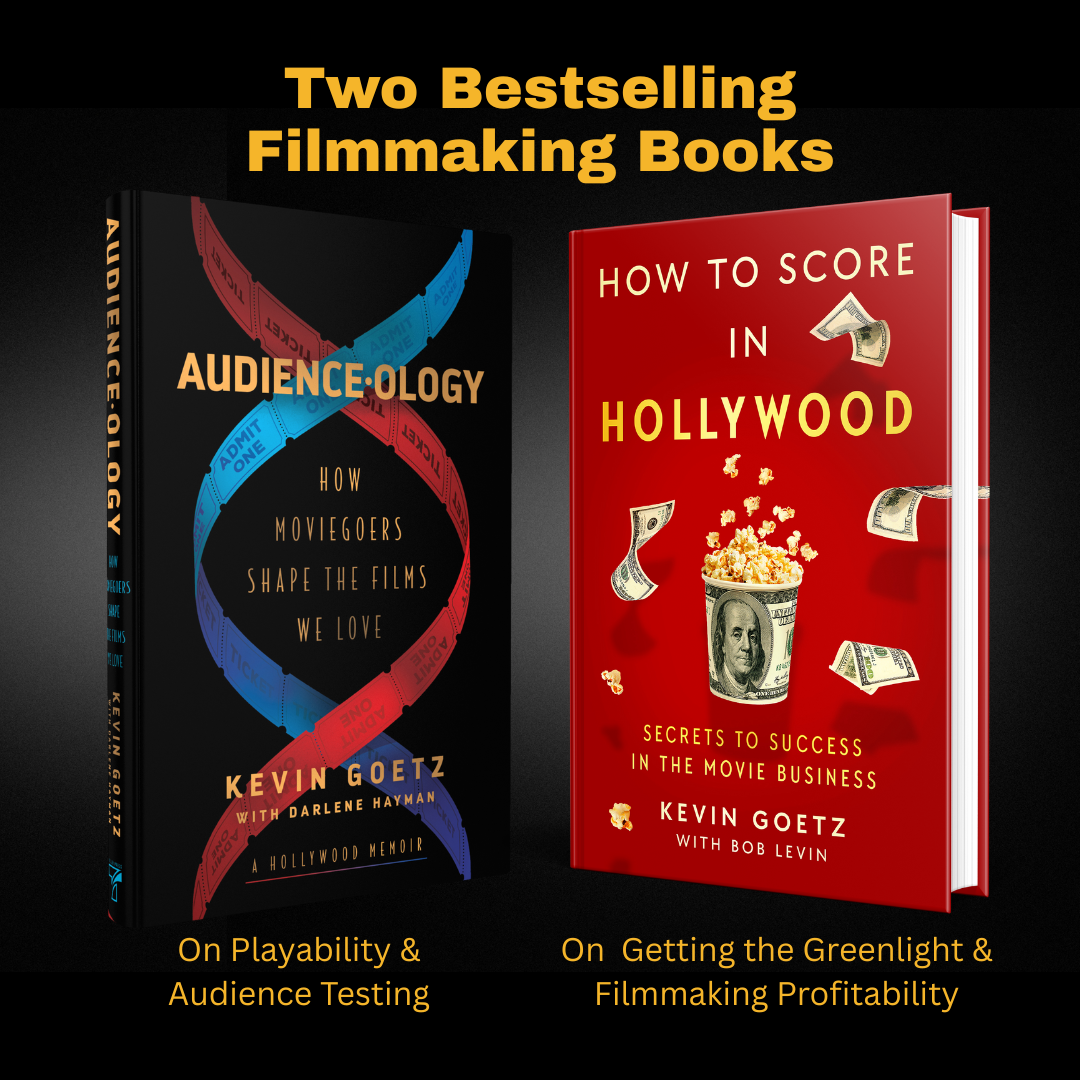
- Audience•ology – A definitive, behind-the-scenes look at how studios test films, interpret audience feedback, and make high-stakes creative decisions before release.
- How to Score in Hollywood – A practical guide to building commercially successful movies, showing how audience insight drives development, marketing, and profitability from script to screen.
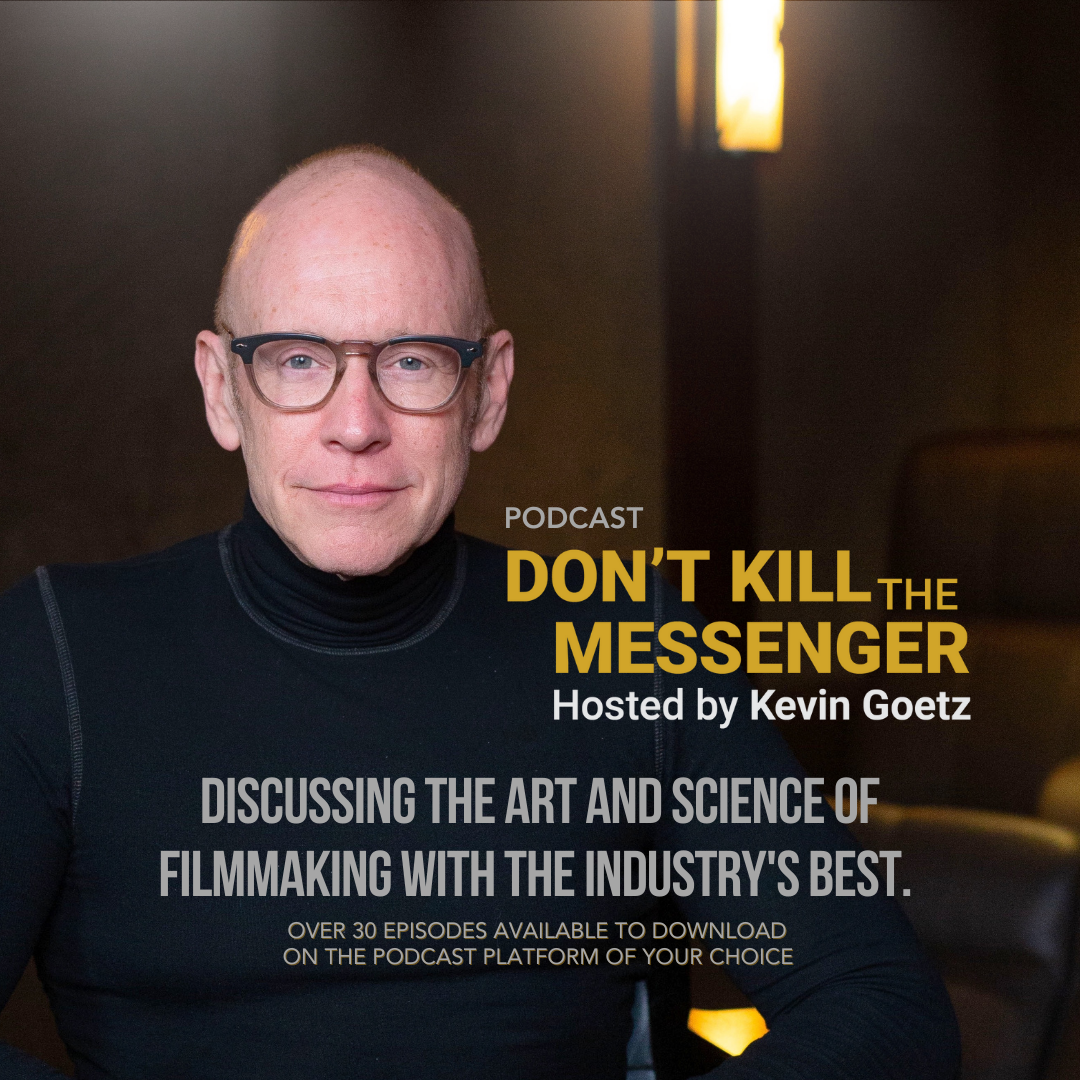
Podcast: Don’t Kill the Messenger
Candid conversations with filmmakers, executives, and creatives about storytelling, testing, and the realities of making movies in today’s marketplace.
Prepared educational materials—including case studies, frameworks, and real-world examples—designed for film students, educators, and emerging filmmakers to understand how audience insight fits into the moviemaking process.
Follow Kevin:
Instagram, Facebook, X, TikTok, YouTube, Substack, LinkedIn