Key Takeaways from Don’t Kill the Messenger Podcast with Kevin Goetz
For two decades, Basil Iwanyk has defied Hollywood’s conventional wisdom, transforming from a Warner Bros. executive into one of the industry’s most successful independent producers. Through Thunder Road Pictures, he’s created the John Wick franchise, produced critically acclaimed films like Sicario and The Town, and proven that authentic storytelling combined with a relentless work ethic can generate billions in box office revenue. In a recent conversation on Kevin Goetz’s podcast “Don’t Kill the Messenger,” Iwanyk revealed the principles and insights that have made him a force in modern filmmaking.
The Jersey Chip: First Generation Work Ethic as Creative Fuel
Iwanyk’s approach to filmmaking stems from his New Jersey roots and first-generation American family background. His philosophy channels outsider status into creative advantage:
“Like a lot of Jersey guys, I’m sure you have it too. We have a chip on our shoulder. Now, I don’t mean it in a way that manifests in being nasty to people, but in kind of that chip on your shoulder, which is I gotta hustle, I gotta outwork, I gotta look around corners, I gotta be able to take a punch and people don’t think I’m good enough and I’m gonna show them.”
This mindset, rooted in his immigrant family’s experience, shaped his entire approach:
“So I grew up around immigrants, Irish and Ukrainian and Italian immigrants. And there was no entitlement. And it was always about just work hard, grind, grind, grind. Like the word grind was not a dirty word. It was like that’s what you do.”
Breaking Into Hollywood: Strategic Deception Meets Basketball
This work ethic, combined with some industry randomness, paved the way for Iwanyk’s entry into Hollywood. Facing the Catch-22 of needing agency experience to get hired by UTA, he fabricated a talent agency called “Waterside Talent Agency.” When Jeremy Zimmer caught the lie (“this is not even a good lie”), his basketball skills proved more valuable than his resume. Zimmer hired him for the UTA mailroom partly because they needed players for industry games.
Warner Bros. Education: Learning Through Failure
His six years as a creative executive provided essential training for later success as a producer. Early mistakes, including publicly criticizing priority projects, taught him the nuances of studio politics, while mentors like Courtenay Valenti showed him how to balance his creative instincts with commercial realities. The Wild Wild West preview disaster, where producer John Peters spilled M&Ms in a silent theater, became a defining moment: “I remember at those moments where it’s pure terror at the minute, but within a couple of days I realized, God, these are becoming great stories.”
The Leap to Independence: Building Thunder Road Pictures
Iwanyk’s decision to leave Warner Bros. for the producer role at Intermedia, then later founding Thunder Road Pictures, demonstrates the calculated risks necessary for career advancement. His motivation was both financial and creative, “I am no genius, but I was smart enough to go, hold on one sec, I have no ownership, I have no real upside. I’m an employee, a complete straight employee. I need to build something in my life.”
His three years at Intermedia taught him international financing and distribution, knowledge that would prove crucial for independent filmmaking. But it was his willingness to learn on the job that made the difference:
“I pretended I knew what I was doing ’cause I don’t think people at Intermedia realize that studios, you’re in your silo and you have everybody else do something. So what you do is you teach yourself, you surround yourself with line producers who you trust, and you never say, I don’t know what I’m doing.”
Budget Discipline: Learning from Expensive Mistakes
Iwanyk’s candid discussion of budgeting failures provides valuable lessons for any producer. His work on Seventh Son and Gods of Egypt showed how projects can spiral out of control when creative ambitions clash with financial realities:
“Most adults would go, okay, let’s trim to get up below the middle number. But we movie business geniuses, we go, no, let’s go higher and let’s have more action and more visual effects and more monsters like we added big visual effects monsters. We just added on top of that. And I look back and I’m like, damn, we did a disservice to the underlying material.”
His budgeting philosophy prioritizes confronting problems early rather than putting them off for a later day:
“I think the mistakes that are made to this day are punting financial problems to the future, post. Right? Like, oh we’ll do it in post and we get to post and understand that if you have a problem on that day, that’s gonna be a problem six months down the road. And so deal with it at that moment.”
The John Wick Phenomenon: How $15,000 Became Billions
The origin story of John Wick reveals Iwanyk’s ability to spot potential in material others dismissed. The script, originally called “Scorn” and featuring a 75-year-old protagonist, was optioned for just $15,000:
“The script was called Scorn and it was a 75-year-old man. We optioned it for 15 grand. We went to Clint Eastwood, they never even read it. And I remember Harrison Ford, who I knew because I made a couple of movies with Harrison Ford and who I love, like I legitimately, he’s a great man. I remember he said something interesting. He goes, revenge is the weakest motivation for a character.”
Iwanyk disagreed with Ford’s assessment, recognizing the script’s emotional power:
I don’t agree with it at all. But I think the genius of Derek Kolstad’s script was most of the audience members don’t understand is if like your partner who was a police officer was killed, or your squad in Iraq was ambushed and everyone was dead, or whatever the case may be. But the idea that some punk took away your puppy, the puppy that your wife who was dying gave to you, saying maybe you could learn how to love again. It was hope. It doesn’t matter who you were, you got that right away.
The film’s financing came from an unexpected source – Eva Longoria secretly provided money through an intermediary, ultimately earning tens of millions on her investment. But even with the finished film, every studio passed:
“We rented out the Cinerama Dome, invited every acquisition executive in Hollywood and thinking, okay, this is gonna be one of the great days of my career. And everybody passed. Everybody.”
Jason Constantine at Lionsgate was the lone believer, though he couldn’t offer an upfront guarantee. The film’s eventual success, spawning four sequels, TV shows, and spinoffs, validated Iwanyk’s instincts about material that others couldn’t see.
Audience Testing as Creative Navigation
Iwanyk’s collaboration with Kevin Goetz on audience testing reveals a sophisticated understanding of how research can enhance rather than compromise creative vision. His experiences on The Town and Sicario show how audience reactions can reveal hidden truths about storytelling.
For The Town, testing revealed a moral divide among audiences:
“You said something, you go, I have a theory, and I’ll never forget this. You go, I think a third of the audience has an issue that our guys are shooting at police officers and they have a moral issue with what they’re doing, and they’re never gonna get behind these guys. Let’s throw all them out. They’re never gonna see the movie. And let’s just focus on the people that are not passing moral judgment on these characters in this movie.”
This insight allowed the team to understand their film’s true identity: “It reminded us that we are doing a noir gangster movie.”
Sicario provided an even more surprising revelation. The scene Iwanyk expected audiences to reject, Benicio del Toro’s violent confrontation with children, became their favorite:
“I’m like, there’s gonna be people who hate the scene where Benicio kills the kids. They’re gonna reject the movie. That’s just gonna happen. I couldn’t have been any more wrong. It was statistically the audience’s favorite scene in the movie. And not only that, we had more people saying that the kids got off easy ’cause Benicio shot them versus what happened to Benicio’s daughter, who was dipped in a vat of acid.”
Iwanyk’s philosophy about testing reflects his broader approach to filmmaking:
“Sometimes you have to look at the DNA of the movie and just put your arms around it and protect it. And we all get in those situations where you dream of it overperforming. But I think if you keep your authenticity, audiences will find it.”
The Return Home: Full Circle Success
One of the most revealing aspects of Iwanyk’s story is his decision to leave Los Angeles and return to New Jersey, where he opened Thunder Road Books in Spring Lake. This move represents more than nostalgia; it’s a full embrace of the values that shaped his success:
“I leave Jersey, and I’m ashamed that I was from the state. And then when I got to the halfway point of me living in LA, I started daydreaming about where I was from. And I started accepting who I was for good and bad from how I grew up.”
His motivation for the bookstore captures his character:
I wanna open a bookstore. I wanna smell the books, I want that vibe. And I want some kid who’s gonna be like me to go, oh my God, this knucklehead from Freehold was able to become a movie producer and he moved back home and he opened this bookstore ’cause he loves storytelling. Fuck it, I’m gonna take a shot.
The Iwanyk Method
What stands out in this conversation is a clear methodology for independent filmmaking success: embrace your outsider status as an advantage, learn the business from the inside before going independent, surround yourself with talented collaborators, trust your instincts even when others don’t see the potential, and never lose sight of authentic storytelling. Iwanyk’s approach offers a proven roadmap for filmmakers willing to work harder than their competition: stay true to your vision while remaining open to feedback, take calculated risks on material you believe in, and never let success make you complacent.
His philosophy about audience research reveals perhaps his most important insight: “If you have the audience in the palm of your hand like that, storytelling-wise, you could do whatever you want if they understand the logic of it emotionally.”
Iwanyk’s films, from John Wick to Sicario to The Town, demonstrate that audiences hunger for authentic stories told with conviction. His collaboration with audience research expert Kevin Goetz shows how testing can reveal the emotional truth at the heart of even the most commercial entertainment.
The full conversation between Basil Iwanyk and Kevin Goetz on “Don’t Kill the Messenger” provides deeper insights into the producer’s creative process and business philosophy. For anyone serious about independent filmmaking or understanding the intersection of creativity and commerce, it’s essential listening.
For more information about Kevin Goetz:
Want to go deeper on audience insight and why it matters in today’s movie business?
Explore Audience360—Kevin Goetz’s hub for books, conversations, and tools that show how audience research shapes what gets made, marketed, and remembered.
Books
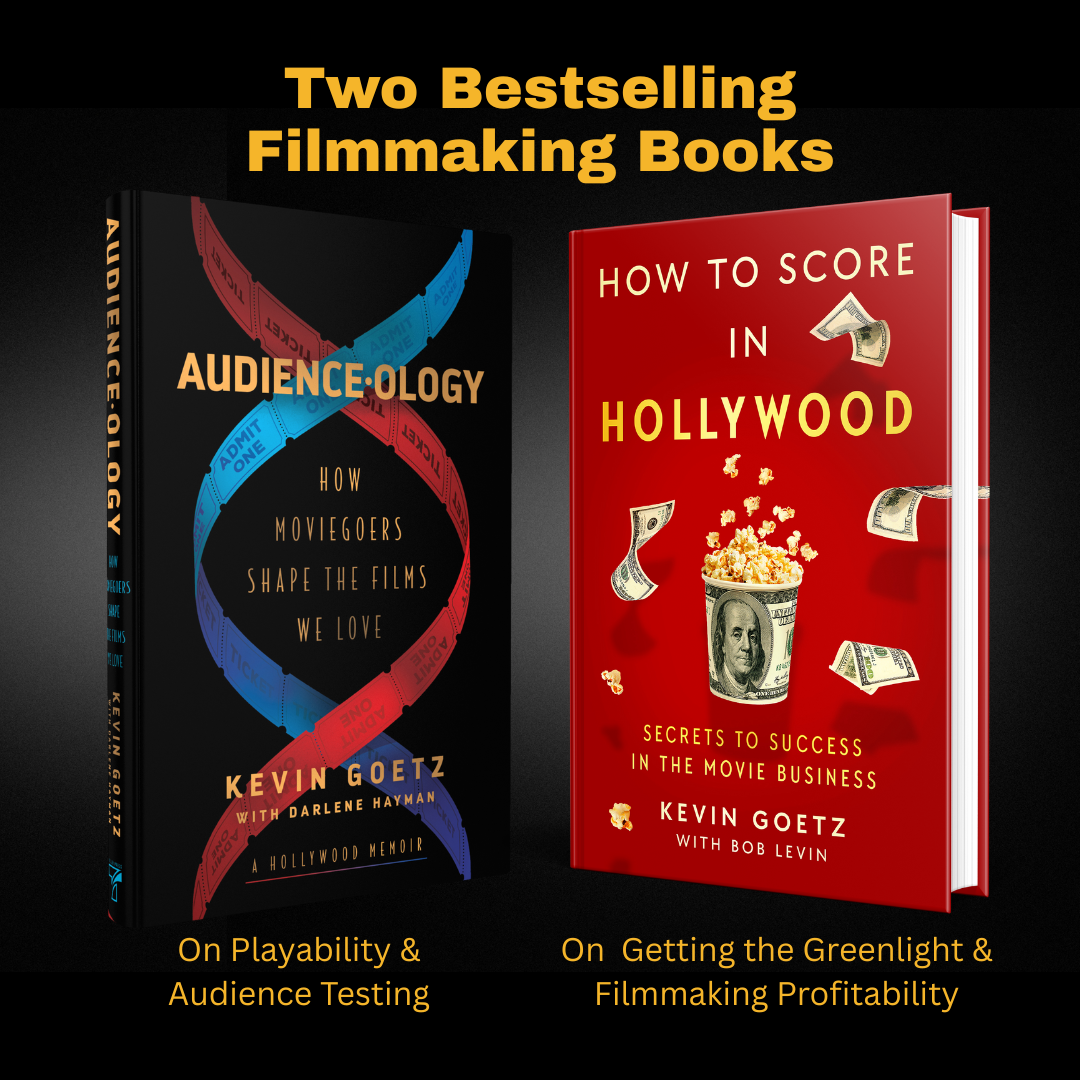
- Audience•ology – A definitive, behind-the-scenes look at how studios test films, interpret audience feedback, and make high-stakes creative decisions before release.
- How to Score in Hollywood – A practical guide to building commercially successful movies, showing how audience insight drives development, marketing, and profitability from script to screen.
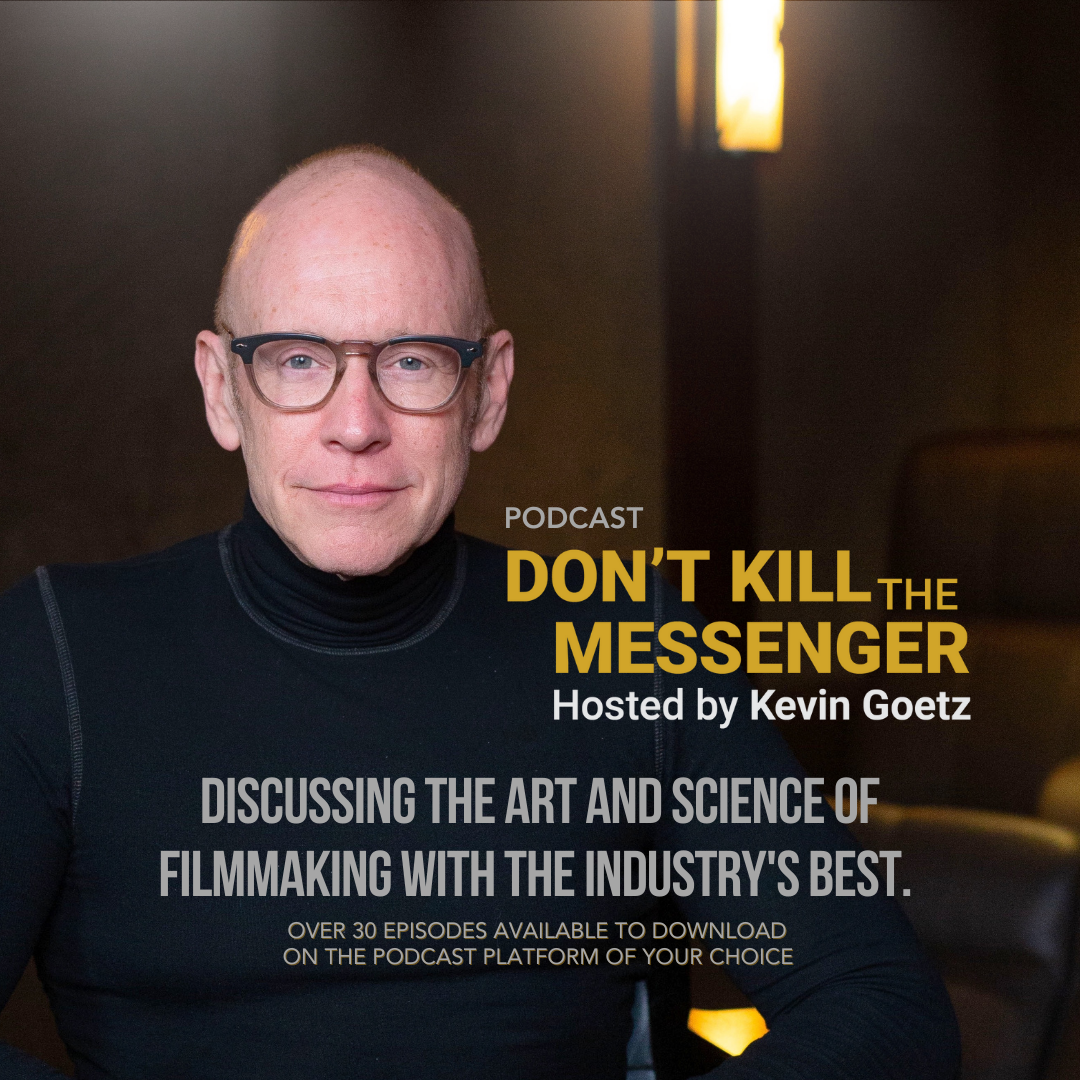
Podcast: Don’t Kill the Messenger
Candid conversations with filmmakers, executives, and creatives about storytelling, testing, and the realities of making movies in today’s marketplace.
Prepared educational materials—including case studies, frameworks, and real-world examples—designed for film students, educators, and emerging filmmakers to understand how audience insight fits into the moviemaking process.
Follow Kevin:
Instagram, Facebook, X, TikTok, YouTube, Substack, LinkedIn