Key Takeaways from Don’t Kill the Messenger Podcast with Kevin Goetz
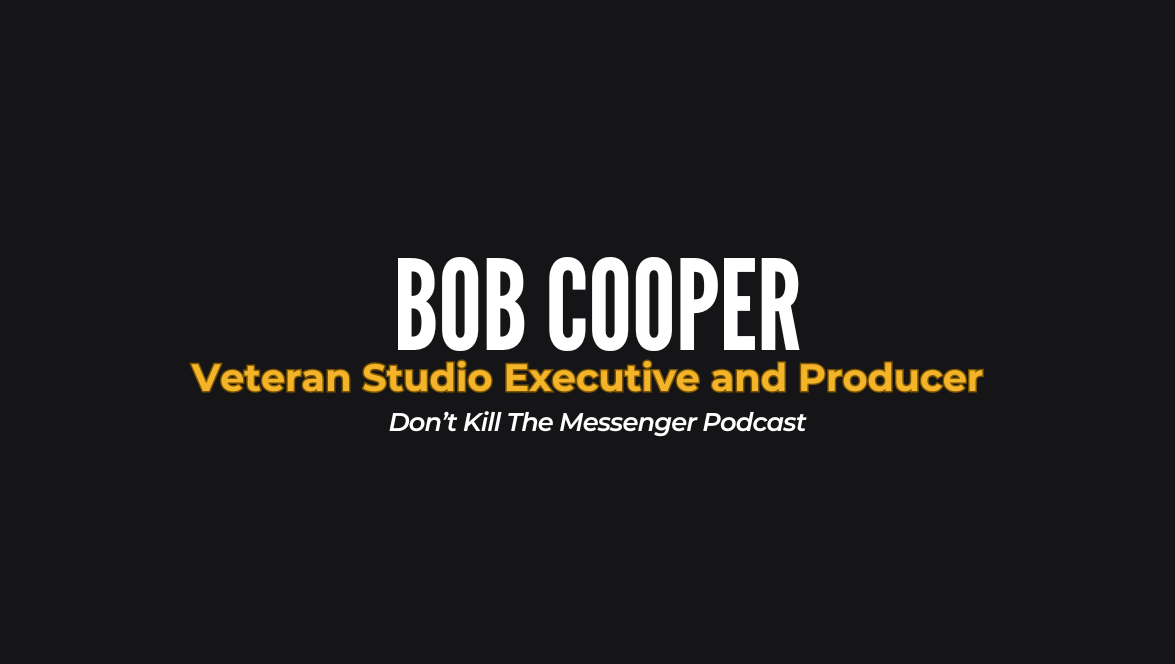
In this episode of Don’t Kill the Messenger, host Kevin Goetz sits down with Bob Cooper, the influential film and television executive who helped transform HBO from a movie channel into a creative powerhouse and who later shaped the theatrical landscape as President of Tri-Star Pictures and head of development and production at Dreamworks. From prosecuting organized crime in Montreal to greenlighting American Beauty, Bob’s career is a lesson in reinvention and risk-taking.
Finding Your “And”
Bob Cooper’s path to Hollywood is unlike anyone else’s in the industry. He grew up in Montreal, the son of a concert impresario who brought Frank Sinatra and Nat King Cole to Canada. At 19, he flew to Los Angeles to study acting at the Pasadena Playhouse, where Dustin Hoffman was a year ahead of him. He quickly realized that acting wasn’t for him.
“I’m a control person, and an actor hasn’t got that control. It’s almost like a piece of meat in a way. You’re going in, you’re selling yourself, and it’s really tough.”
His parents cut him off financially and sent him home to pursue a profession. He went to law school at McGill, where he discovered something unexpected: he loved it, because law was really about stories. After graduating, instead of joining a law firm, he founded Canada’s first storefront legal aid office, bringing legal services directly into low-income neighborhoods. The Quebec Minister of Justice was so impressed that he asked Bob to build a network of these offices across the entire province. Then came another unexpected turn: the Minister asked him to prosecute organized crime.
From there, the CBC recruited him to host a national investigative news program called Ombudsman, essentially a Canadian 60 Minutes, which he did for six years. It was on this show that he learned the lesson that would shape everything that followed: the real control is behind the camera, not in front of it.
Kevin frames it well: each chapter of Bob’s life — acting, law, legal aid, organized crime prosecution, television hosting — wasn’t a detour. It was a building block. The sociology of poverty informed his instinct for underdog stories. The law gave him a nose for conflict and resolution. The television show taught him what resonates with a mass audience. By the time he got to Hollywood, he was drawing on all of it.
Crisis as Opportunity
Bob’s early producing career in Canada started promisingly. His first films, including one with Michael Douglas called Running and another with Bruce Dern and Ann-Margret called Middle Age Crazy, were profitable before they even opened, thanks to clever exploitation of early video rights. He began to think the movie business was easy. He scaled up, brought in partners, raised more money, and things fell apart. He mortgaged his house without telling his wife. He had to let most of his staff go. He was left with one project: The Terry Fox Story, about a young Canadian who lost his leg to cancer and ran across the country before dying of the disease. The CBC wouldn’t make it because the script contained the word “shit.” Bob had nothing left to lose.
“There’s a great Chinese expression. The word in Chinese for crisis is the same word as opportunity. I’m in crisis, going broke. This turns out to be the biggest opportunity because it changed my career.”
He flew to New York and walked into HBO with a pitch: you can’t keep running old movies, you need to make something original. Out of desperation, he convinced them to try. The Terry Fox Story became the first original film in HBO history. It worked. And it opened a door that would define the next decade of his life.
No Vanilla Allowed
Michael Fuchs, who ran HBO, had a simple mandate for Bob when he eventually hired him to head the original movies division: don’t bring me vanilla. Bob’s first film in the job was terrible. He called his wife from the parking lot before screening it for Fuchs, certain he was about to be fired.
“Michael watched it and laughed. He said, it’s really bad, but it’s not vanilla. And that gave me an opportunity.”
That gave Bob the permission he needed to think differently about what HBO movies could be. He looked at what they’d been making before he arrived and saw a pattern of small, forgettable films that weren’t standing out. He asked himself a simple question: what could I make that you wouldn’t see in a theater and you wouldn’t see on network television?
The answer came from something he’d learned hosting his Canadian news show: true stories. Not the safe, sanitized kind, but the challenging, cinematic, culturally resonant kind that studios wouldn’t touch and networks were afraid of.
“True stories, which people think, oh God, what do we need them? And if they’re sad, no one’s gonna watch. Looking back, that was the key ‘and.’ And so I began making films. The first one was The Josephine Baker Story. Josephine Baker was this Black woman from St. Louis who grew out of terrible poverty and terrible segregation. She moved to Paris, became very famous in France, and she came back to America. But no one wanted her. She fought segregation. She was one of only two women with Martin Luther King in ‘63. She became a spy on behalf of the resistance and was treated terribly here by J. Edgar Hoover because she was very critical of racism in America.”
The film was met with resistance inside HBO. Nobody knows who she is. Nobody cares. Bob made it anyway. When it worked, he and Fuchs looked at each other and said: we’ve got it. That was the template. Films like And the Band Played On, Barbarians at the Gate, and The Positively True Adventures of the Alleged Texas Cheerleader-Murdering Mom followed, each one a project that conventional wisdom said couldn’t work. Bob came to see internal resistance as a signal, not a warning.
Tristar, John Calley, and Jerry Maguire
After nine years at HBO, Bob made the leap to features, becoming President of Tri-Star Pictures under Sony chairman Alan Levine. Six weeks into the job, Levine was let go. The incoming studio head, John Calley, had a personal grievance with Bob dating back to an HBO project that had gone badly. Bob read in the trades that he was likely to be fired before he’d barely started.
He survived long enough to make one lasting contribution. In a marketing meeting for Jerry Maguire, Bob sat silently while everyone around him debated why the film wasn’t testing well. It was being seen as a football movie or an Irish comedy because of the name. Jim Brooks, who was producing the film, pulled Bob aside afterward and pushed him to say what he was actually thinking.
“So finally, I blurted out: if it was an HBO movie, we would market this by theme. It’s quite simple. It’s a comedy about not selling out. Not only will our lead guy not sell out, but Renee Zellweger won’t sell out. What he says to her: I’ll stick with you, I’ll stick with your kid. And she says, that’s not good enough. It’s a comedy about not selling out.”
Brooks took that framing directly to Cameron Crowe, and the two of them spent Thanksgiving reworking the entire marketing campaign around it. Crowe later told Bob it was mathematically provable that the numbers completely changed.
Dreamworks and American Beauty
Bob left Tri-Star after two years and got a call from Jeffrey Katzenberg almost immediately. He joined Dreamworks as head of development and production, working directly with Steven Spielberg.
One weekend, as he was leaving for Cabo, one of his executives stopped him and insisted he read a script. Bob resisted. The executive used one of his precious chits, the rare privilege Bob extended to his team to say, without explanation, you have to read this. The script was American Beauty.
“It was called American Beauty, but it was hard to pitch. And I got it. And I thought it was amazing. It was unique. It was so funny. It was moving. And thematically, it was about people who love, who can’t say they love, who can’t bring themselves. They have so much pain in them.”
Bob called Spielberg on a Thursday and asked him to read it quickly.
“He said, why do you want me to read it? You didn’t develop it. I said, I don’t want to develop it, I want to make it. He reads it that night. Seven in the morning the next day, he calls Walter Parks and me and says, this is really something, come into my office. And when he saw the first cut of the movie, he said, this is an Academy movie. He said it immediately.”
American Beauty went on to win Best Picture. Bob also brought Meet the Parents to Spielberg, who simply picked up the phone and called Universal’s Edgar Bronfman on the spot to acquire it. And he was among the first to see the potential in a nearly unpitchable script about four aliens who come to Earth and mistake a washed-up TV star for a real spaceship captain. That film became Galaxy Quest.
Pain is the Engine
Late in the conversation, Bob arrives at the philosophy that has quietly guided everything he’s made. It starts with Babe.
“None of us are pigs that want to be sheepdogs. Why do we care? It’s because we identify with the pain of this poor pig trying to be something where people say, you’ll never be it. And he sort of wonders, but he does it. We all wonder, especially when we’re younger, can we be more than what people think we are?”
Pain, Bob argues, is the engine of every great story, including comedy. It’s what allows audiences to connect with characters whose circumstances are nothing like their own. It’s the reason a film about a pig can make adults cry.
This philosophy shapes his current project, a stage play about Bobby Kennedy in the aftermath of JFK’s assassination. The story centers on RFK’s profound guilt, his belief that his own crusades against the mob, against Southern segregationists, against Cuba had made his brother a target. Ethel Kennedy, overwhelmed by her husband’s grief, asked Jackie Kennedy to take Bobby away with her to Antigua. The play is about what happened there, and how Jackie brought Bobby back to life, in part through a passage from Aeschylus that RFK would carry with him for the rest of his life and that is now inscribed on his grave.
“In our sleep, pain which cannot forget falls drop by drop upon the heart, until in our own despair, against our will, comes wisdom through the awful grace of God.”
Cooper’s introversion, the quiet reading, the thinking, the preference for being in the room over being at the party, produced something valuable: a genuine, deeply considered point of view about what makes stories matter. In a business full of people who can tell you what’s commercial, Bob Cooper spent forty years asking a different question. What hurts? And how do we make an audience feel it?
That instinct, built across careers in law, television, and film, across countries and decades and countless projects others said couldn’t be done, is his real legacy.
The full conversation between Bob Cooper and Kevin Goetz on Don’t Kill the Messenger goes even deeper into the creative philosophy of one of Hollywood’s most quietly influential executives, revealing how a lawyer from Montreal helped invent prestige television and found success by championing stories others wouldn’t touch.
For more information about Kevin Goetz:
Want to go deeper on audience insight and why it matters in today’s movie business?
Explore Audience360—Kevin Goetz’s hub for books, conversations, and tools that show how audience research shapes what gets made, marketed, and remembered.
Books
- Audience•ology – A definitive, behind-the-scenes look at how studios test films, interpret audience feedback, and make high-stakes creative decisions before release.
- How to Score in Hollywood – A practical guide to building commercially successful movies, showing how audience insight drives development, marketing, and profitability from script to screen.
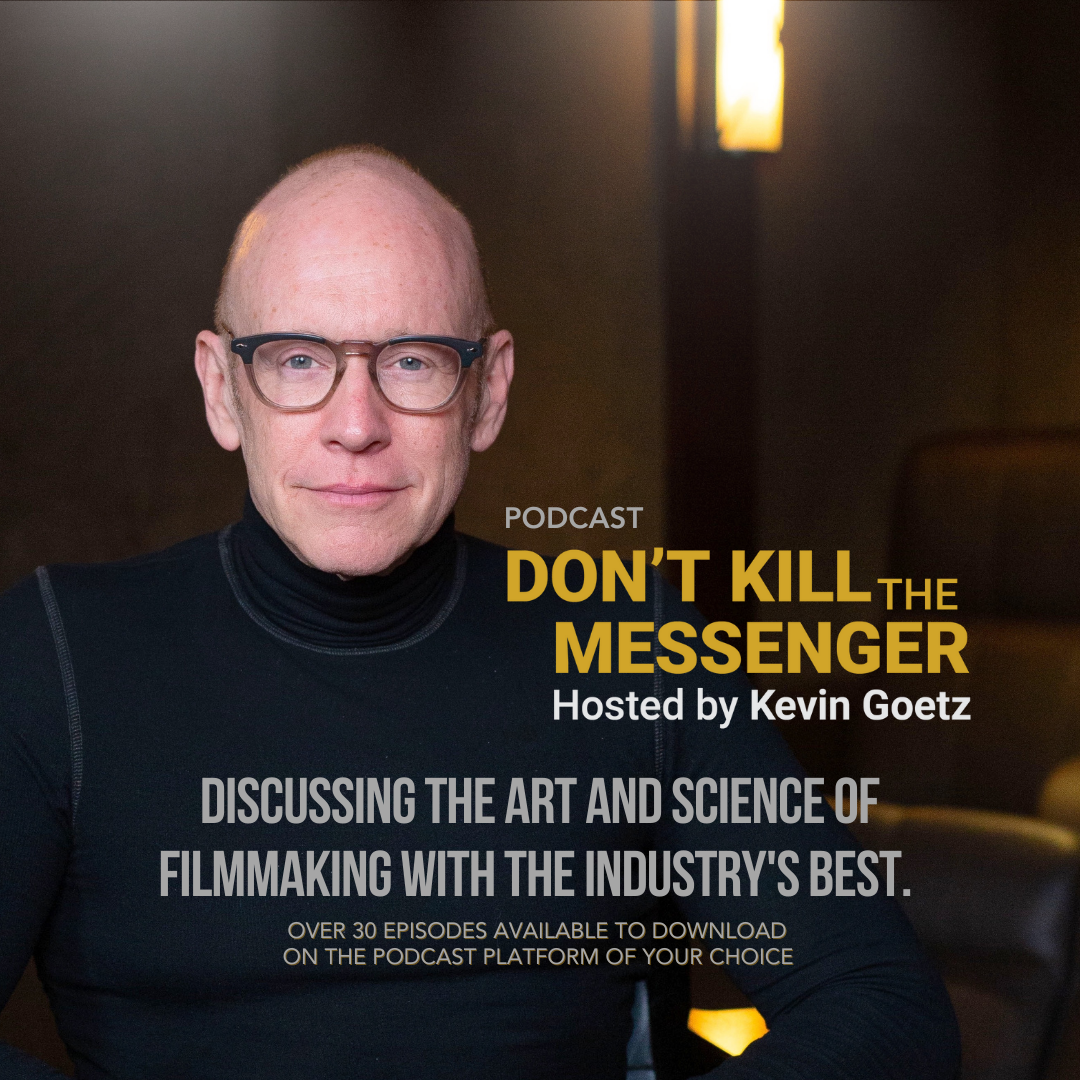
Podcast: Don’t Kill the Messenger
Candid conversations with filmmakers, executives, and creatives about storytelling, testing, and the realities of making movies in today’s marketplace.
Prepared educational materials—including case studies, frameworks, and real-world examples—designed for film students, educators, and emerging filmmakers to understand how audience insight fits into the moviemaking process.
Follow Kevin:
Instagram, Facebook, X, TikTok, YouTube, Substack, LinkedIn