Key Takeaways from Don’t Kill the Messenger Podcast with Kevin Goetz
For more than two decades, Ric Roman Waugh has been making commercial action films that have something to say. Through a career that began in the stunt world and evolved through years of screenwriting, he has built a reputation as one of the most distinctive voices in action cinema. In a recent conversation on Kevin Goetz’s podcast Don’t Kill the Messenger, Waugh revealed the philosophy, mentors, and lessons behind films like Felon, Snitch, Shot Caller, Angel Has Fallen, Greenland, and Shelter.
Early Days in the Stunt World
Waugh grew up in the movie business. His father, Fred Waugh, was a founding member of Stunts Unlimited, the legendary stunt collective led by Hal Needham. But rather than simply inheriting a career, Waugh used his proximity to the industry to study how films are actually made, and how the best filmmakers lead.
The directors who left the deepest impression were the ones who elevated everyone around them. Tony Scott and Jerry Bruckheimer became Waugh’s greatest influences, not just as creative forces but also as examples for building a collaborative set.
“I love the way that he commanded by respecting everybody around him and asking them to be the rock stars that’ll make him shine. And so I’ve always tried to have that collaborative experience for everybody that I’m involved with from the very beginning of my development phase to prep, to shooting.”
Bruckheimer reinforced the same lesson in a different way, with direct, honest feedback that Waugh came to rely on.
“He was another one that was a great mentor to me of shooting me straight. Even when I had it wrong, he would call me on it and say, ‘No, did you look at this angle?’ And that’s what you need. You need people around you because this business is so tricky.”
Hal Needham, the godfather of the stunt world, taught Waugh about character and loyalty. Waugh recalls Needham showing up to his father’s memorial service despite being gravely ill himself, saying simply, “I hate funerals. I don’t go to anybody’s funeral, but your dad meant the world to me. I told him I’d be there, and I’m here.” Needham passed away the following year. It was the kind of gesture that defined what the stunt community meant to Waugh, as well as the kind of person he has worked to become.
Finding His Voice
Before directing, Waugh spent six or seven years writing originals for some of Hollywood’s biggest producers, including Mark Gordon, Neal Moritz, and Jerry Bruckheimer. Rather than viewing that period as development hell, he saw it as essential education.
“I had this war chest of knowledge on a set. There’s nothing on a movie set you can’t tell me how it works. But I knew nothing about going into an executive’s office, pitching your wares, the development process. Those six to seven years were extremely vital to me.”
The turning point came during a frank lunch with his agent, Nicole Clemens, who told him his writing was getting worse. She pushed him to ask what he actually wanted to make. His answer was rooted in the cinema of Sidney Lumet, films that were commercial and entertaining but left audiences debating what they’d just seen on the way out of the theater.
“I wanna make movies that would entertain you, but you’d walk out of the theater, and you’d be talking about the subject matter. They weren’t preaching to you, they weren’t opinionated, they just showed you something, and they were about something bigger than just the popcorn of them.”
That conversation led directly to Felon, a film about the California prison system that Waugh researched by volunteering as a parole agent. He wrote it on spec, produced it on spec, made almost nothing, and did it all with newborn twins at home. It was the foundation of everything that followed.
Hiding the Peas in the Mashed Potatoes
The film that crystallized Waugh’s mission was Snitch, starring Dwayne Johnson. Both men were at similar crossroads in their careers, eager to break free of the pigeonholes their backgrounds had created. Johnson was coming off films that didn’t reflect who he wanted to be as an actor. Waugh was trying to figure out how to balance social relevance with commercial viability.
The answer came during a press tour panel with documentary filmmaker Eugene Jarecki, who was promoting The House I Live In, a film about the same drug sentencing laws at the heart of Snitch. Jarecki told Waugh he envied him. “I’m playing in churches,” he said. “You’re on 2,500 screens.”
“That is really where it dawned on me that if you wanna be a theatrical filmmaker, if you wanna make commercial fare, it’s the responsibility to your partners, the people giving you that money. How do you do that and make something big, visceral, and exciting? But how do you thread the needle and put something that is intimate, thought-provoking, sometimes provocative, pushing people’s buttons? Each movie I go into, how do I hide the peas in the mashed potatoes?”
That mission statement has shaped every film since. In Angel Has Fallen, Waugh transformed a franchise entry into a meditation on mortality and professional identity, turning Gerard Butler’s Mike Banning into a pill-popping Secret Service agent struggling to accept that his time may be running out. In Shelter, he persuaded Jason Statham to strip away the quips and fast talk and sit in silence for the film’s opening act, embodying a man who has exiled himself from the world.
“We went through this period where it felt like everybody was 10 feet tall and bulletproof and impervious to pain, and they felt cardboard to us. So everything I’m trying to do is chip away at that and trying to make these action heroes people, normally everyday people with their own flaws, vulnerabilities, and humanize them in a way that they become us.”
The Audience Is Always in the Room
Waugh’s process involves early and serious engagement with audience feedback. His long working relationship with Kevin Goetz and Screen Engine has shaped the way he thinks about storytelling from the ground up. Waugh doesn’t wait for formal test screenings to start listening. He shows early material to a small, trusted group, looks for common denominators in their reactions, and uses that information to identify what isn’t landing before it becomes a larger problem. That instinct extends to the set itself.
“God bless them, the filmmakers that can do 30, 40 takes. That is not me. And if by take five something’s not working, I stop. I literally stop and say, ‘We’re forcing something.’”
That philosophy was put to the test during the production of Shelter. A key scene introducing Jason Statham’s character wasn’t working. Rather than push through, Waugh cleared the set, sat down with Statham and his young co-star Bodhi Rae, and spent half an hour simply talking through what the scene was trying to say. They rebuilt it together from the ground up.
“And the fact that you can take a young actress like this and completely throw away what they had rehearsed and memorized, and then put a whole new kind of configuration together, and literally two takes later, you have this amazing scene that’s heartfelt, it’s witty, it’s on point. Sometimes we have to watch pushing things too hard, because when they’re not going together, what’s the black swan? What’s the reason they’re not landing? It’s taking a full step back and analyzing and getting a better perspective.”
The Business of Getting Films Made
Despite a first-look deal with Lionsgate, every film Waugh has made has been a negative pickup, independently financed and packaged before finding studio distribution. It is a model that demands resilience. Shot Caller nearly collapsed when Relativity Media went out of business mid-development. Waugh called his agent Graham Taylor, regrouped, and eventually packaged the film through Participant Media with Nikolaj Coster-Waldau in the lead, a casting choice that prioritized acting ability over action-star recognition. The film found its audience.
“The ones that are scrappy, the ones that roll up their sleeves and dust themselves off and just keep going, that’s how you get things made. What I’ve been trying to figure out is when not to be a juggernaut. Because there are some times when you’re trying to force something that you put blinders on, and sometimes you gotta stop, take a full step back, get perspective, and go, ‘This is why this is not working.’”
What’s Next
As confident as Waugh is in his approach, he doesn’t pretend the current landscape is easy. Getting original stories in front of audiences amid fractured attention and declining traditional marketing is one of the industry’s defining challenges.
“How many people have the phone six inches from their face, and they’re not looking at billboards. They’re not looking at traditional marketing. They’re not looking at any of that. How do you tap into those people, but also in a way that you’re giving them a chance to understand this may be original IP that you’re doing?”
His answer, still evolving, centers on community. Build an audience early. Find people where they are. Don’t wait for them to come to you. It’s the same scrappy philosophy that has defined his entire career, applied now to the problem of making sure the films he fights to get made actually reach the people they were made for.
The full conversation between Ric Roman Waugh and Kevin Goetz is available now.
For more information about Kevin Goetz:
Want to go deeper on audience insight and why it matters in today’s movie business?
Explore Audience360—Kevin Goetz’s hub for books, conversations, and tools that show how audience research shapes what gets made, marketed, and remembered.
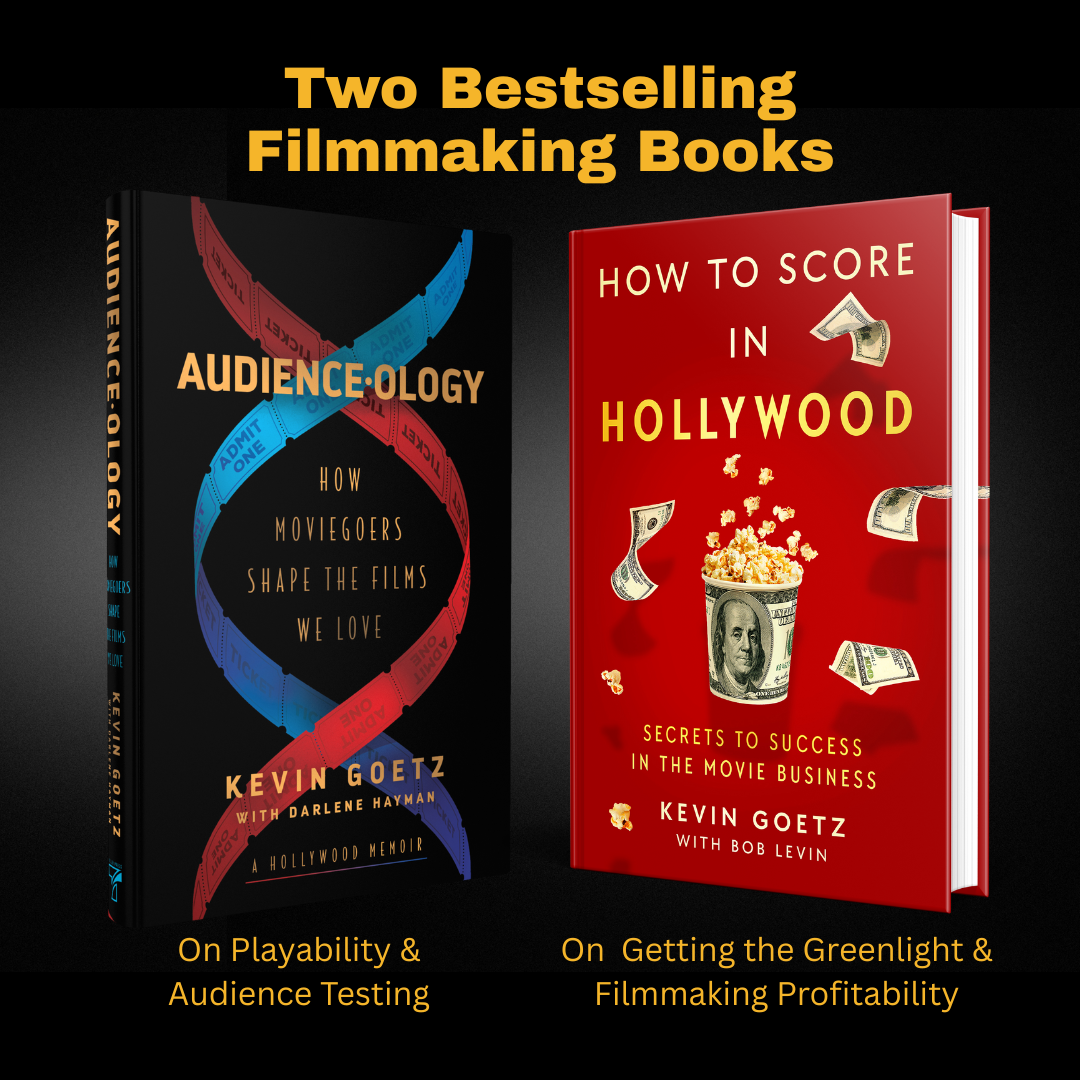
Books
- Audience•ology – A definitive, behind-the-scenes look at how studios test films, interpret audience feedback, and make high-stakes creative decisions before release.
- How to Score in Hollywood – A practical guide to building commercially successful movies, showing how audience insight drives development, marketing, and profitability from script to screen.
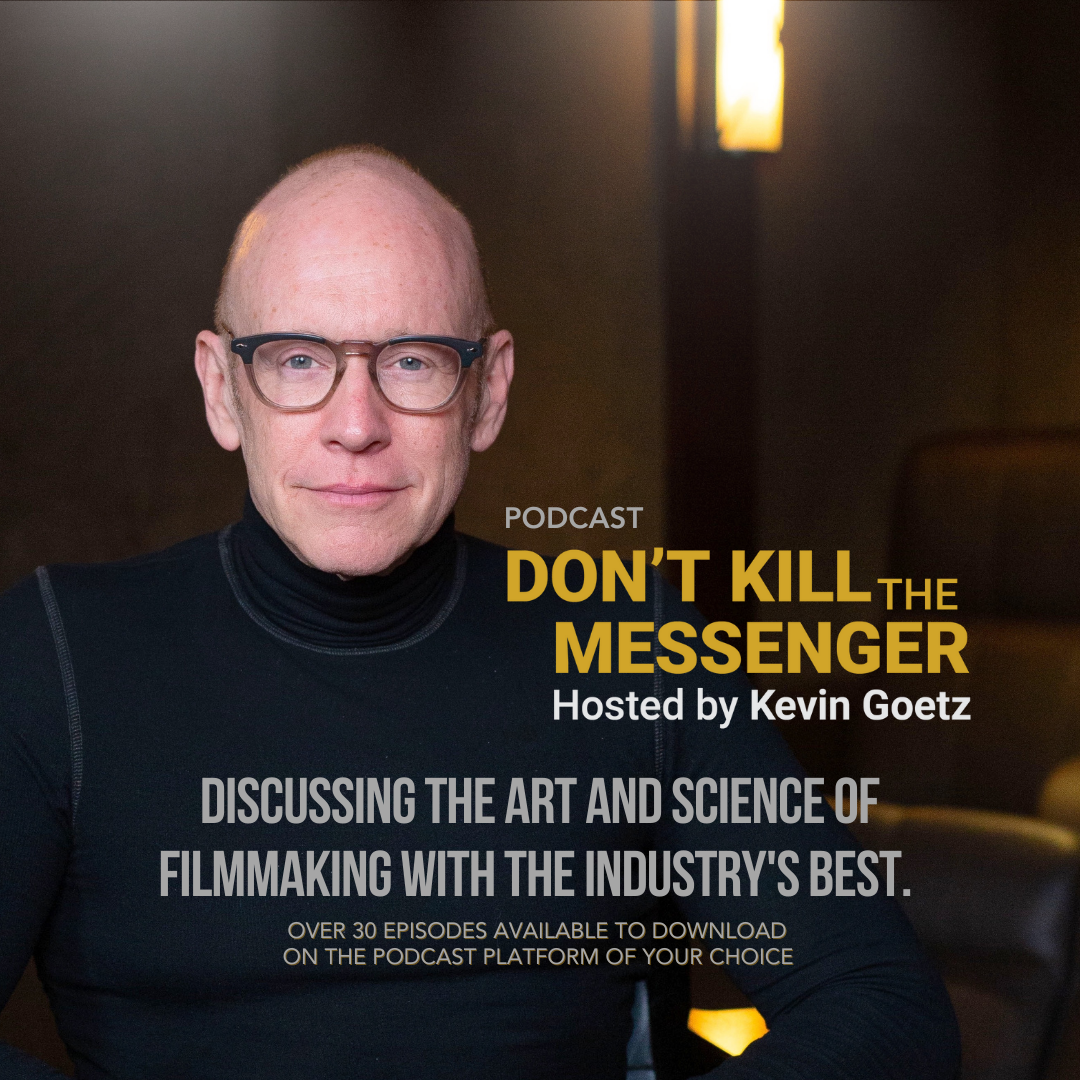
Podcast: Don’t Kill the Messenger
Candid conversations with filmmakers, executives, and creatives about storytelling, testing, and the realities of making movies in today’s marketplace.
Prepared educational materials—including case studies, frameworks, and real-world examples—designed for film students, educators, and emerging filmmakers to understand how audience insight fits into the moviemaking process.
Follow Kevin:
Instagram, Facebook, X, TikTok, YouTube, Substack, LinkedIn