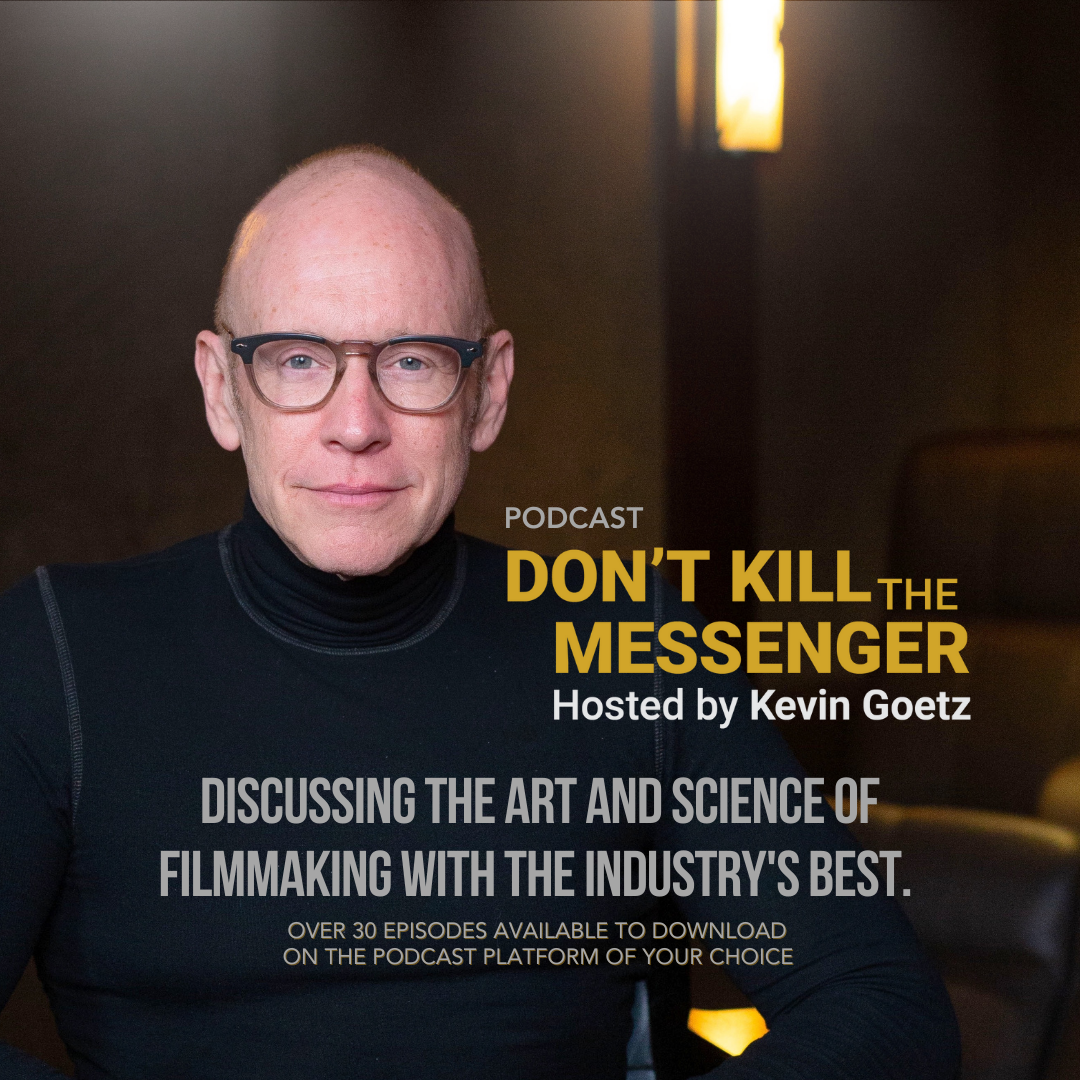
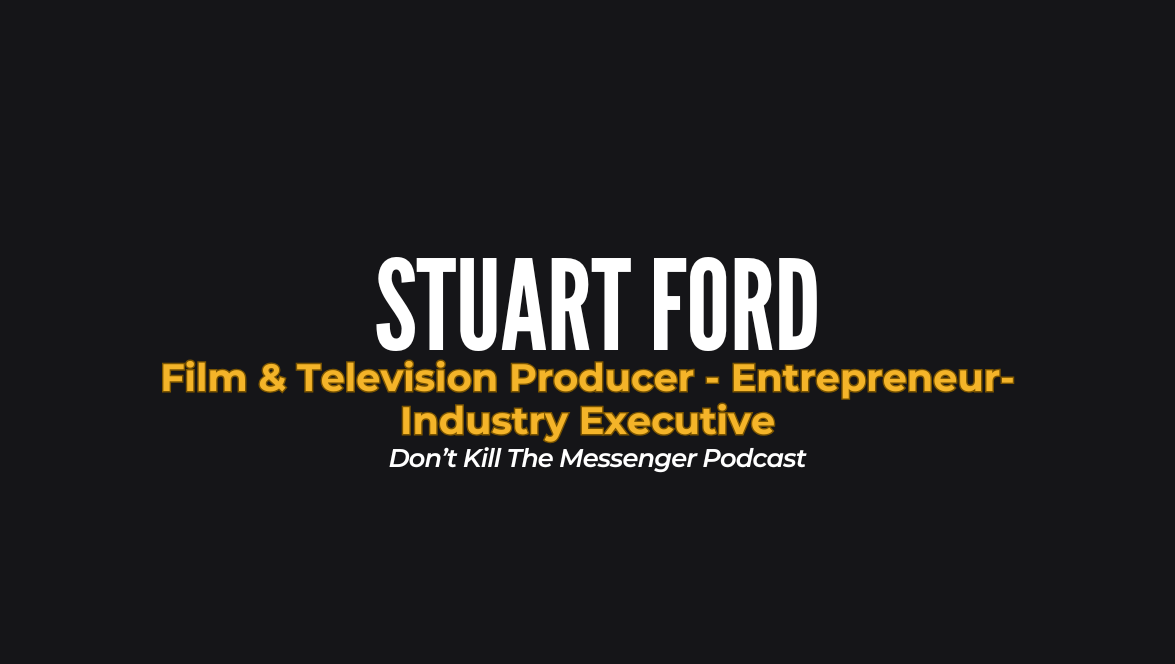
Key Takeaways from Don’t Kill the Messenger Podcast with Kevin Goetz
For nearly three decades, Stuart Ford has been one of the most influential figures in independent cinema. Through a career that began in the courtrooms of London and evolved through the corridors of Miramax. He’s earned Variety’s International Film Award, been named one of The Guardian’s 50 most influential people in global cinema, appeared multiple times on Variety’s 500, and, in 2023, received Variety’s billion-dollar producer honor at Cannes. He’s the chairman and CEO of the Super-Indie AGC Studios and previously founded IM Global, which he built into an international studio powerhouse spanning North America, Europe, Asia, India, Latin America, and the Middle East. In a recent conversation on Kevin Goetz’s podcast Don’t Kill the Messenger, Ford revealed the philosophy, mentors, and lessons behind his success.
From Liverpool to Oxford to the Jungle
Ford grew up in Liverpool, a rough, working-class city in the 1970s and 80s, where there was no obvious path into the movie business. He earned his way to Oxford, where he studied law but spent much of his time managing bands and comedians, getting his first taste of entrepreneurship. After qualifying as a solicitor, he joined the UK’s top entertainment law firm, immersing himself in the British indie film boom of the early 90s, an era defined by Trainspotting, Four Weddings and a Funeral, and the Merchant Ivory films.
But it was American independent cinema that captivated him. He was running to theaters to watch this growing wave of indie movies, and when he noticed that Miramax’s UK office was a client of his law firm, he made his move.
“I bluntly sort of fluttered my eyelashes a bit and persuaded them to hire me.”
The New York team quickly offered him a role stateside. He was in his mid-20s, unmarried, and ambitious. He took it. His first meeting with Harvey Weinstein set the tone immediately.
“He was in a horrendous mood, munching on a tuna fish bagel fairly repulsively, and I’m pretty sure the bagel got thrown at somebody before the end of the meeting. I kept my mouth shut and hid.”
Miramax: The Real Film School
Ford rose quickly through the ranks, co-heading acquisitions, running overseas production offices, and ultimately leading international sales across 70 territories. He describes those years in two buckets.
The first was education. He was flying to Paris to try to acquire Amélie before anyone else saw it. He was sitting up all night at film festivals bidding on prestige dramas. He oversaw marketing and publicity campaigns globally alongside filmmakers such as Quentin Tarantino, Anthony Minghella, Kevin Smith, and James Mangold.
“That was an incredible immersion program for me in how to work with world-class filmmakers in sales, in marketing, in publicity, in deal-making. That’s where I learned my movie business skills.”
The second bucket was entrepreneurial awakening. Watching Harvey and Bob Weinstein operate, Ford began to sense that he wanted to build something of his own.
“Those guys were hustlers, and they were entrepreneurs. Over the course of those six or seven years, I sort of felt — nah, I want to do this on my own.”
The Birth of IM Global
Ford’s departure from Miramax was catalyzed by an unlikely detour: a high-profile bid to buy his hometown soccer club, Liverpool FC. The attempt fell short, but it lit something in him. He and his wife made a decision. Stay in the US, stay in film, but do it independently.
He borrowed $5 million from a London hedge fund, moved to Los Angeles, and launched IM Global in 2007. Early financing partners came and went, including a German public company that collapsed within six months. Ford kept going.
“I basically picked up the baton and started running like hell.”
Two films broke the company out. The first was Tom Ford’s directorial debut, A Single Man, which performed strongly internationally. The second changed everything.
Paranormal Activity and the Midnight Screening
When Paranormal Activity was languishing in limbo at DreamWorks, Ford watched it alone in a conference room under bright strip lighting and sensed something was there. He paid $250,000 for the international rights.
What followed became one of the more creative gambits in recent independent film history. With the film still stuck at Paramount after the DreamWorks acquisition, Ford and producer Jason Blum organized a midnight screening at AFM in Santa Monica. Loud rock music in the auditorium. No one let in until five minutes before showtime. A line two blocks long snaking down the street.
“Of course, the film in a packed movie theater played through the roof.”
Kevin Goetz, who was brought in to test the film, revealed on the podcast that Steven Spielberg suggested the final reshoot that raised test scores by 15 to 20 points and sealed Paramount’s decision to release the film theatrically. The international rights deal Ford had made for $250,000 payed tremendous dividends. Two years later, he sold IM Global to Reliance, the Indian conglomerate that had also invested in DreamWorks.
Owning Films Forever
With Reliance backing, Ford shifted the company’s model from selling other people’s films to financing and owning its own. The first film IM Global ever financed was a Jason Statham action film called Safe. More followed, building toward the two films Ford considers his proudest creative achievements from that era: Mel Gibson’s Hacksaw Ridge, for which he committed a $28 million international minimum guarantee, and Martin Scorsese’s long-gestating passion project Silence.
“It becomes a much more interesting business when you’re not on the hamster wheel of make a movie, sell a movie, make a movie, sell a movie. It’s make a movie, own a movie forever.”
After selling IM Global to a Chinese private equity group in 2016, Ford departed within a year and launched AGC Studios in 2018 with fresh capital and no non-compete restrictions. The company has since produced nearly 45 films and television shows, including Hitman, Woman of the Hour, The Tinder Swindler, and the $150 million epic Those About to Die.
The Art of Managing Risk
Ask Ford why he is still standing when so many of his peers have not survived the industry’s upheavals, and his answer is clear.
“I think it’s marrying creative risk-taking with prudent financial investment, and then being good at execution.”
He is equally candid about what happens when that discipline slips. Chris Pine’s directorial debut, Poolman, is his cautionary tale, a screwball-noir homage to 70s cinema that Ford partly backed out of personal affection for Pine as a filmmaker.
“I allowed myself to maybe just drink the Kool-Aid by 10%, 20%. That’s the difference between making money and losing money.”
His preferred case study in getting it right is Ron Howard’s Eden. The film underperformed theatrically, but Ford had pre-sold the international rights to Amazon upfront, covering a substantial portion of the budget before a frame was shot.
“Nobody’s gonna get hurt because we managed our risk upfront. And in some ways, although it wasn’t perceived as a success, it’s actually a good case study in risk management because that allowed me to partner with a world-class filmmaker on a risky film, and nobody got hurt.”
The same discipline applied to Rick Linklater’s Hitman, where Ford managed risk carefully going in, and made significant money as a result.
Building Something That Lasts
When Goetz asks Ford what drives him most, the answer is not the deal-making or the acquisitions. It is the library.
“We have a library. We’ve only been around for six years or so, but we own about 40 films and TV shows. We’ll own them forever unless and until we sell the library. And I can look at that and say, that’s a body of work that we created in a material way. And then as a business person, the fact that you’re creating an asset that is worth tens of millions of dollars, hopefully hundreds of millions of dollars one day — that’s a good way of getting yourself out of bed in the morning.”
Why Independent Film Has a Future
Ford is bullish on the independent sector at a moment when many are not. He argues that studios have effectively ceded the market for intelligent adult drama, that streaming rights are beginning to be resold more efficiently across multiple windows, and that AI-driven cost reductions, combined with real-time dubbing technology, will unlock creative markets in Latin America, Africa, and the Middle East that are currently capital-starved yet talent-rich.
“The independent film sector has always been the place where people take risks, where originality finds a pathway. And it’s hard not to be super optimistic about the creative potential of that in the coming years.”
His message for the next generation of filmmakers is direct. The demand for authenticity and originality is growing. But creative ambition has to be paired with financial responsibility.
“Responsible filmmaking doesn’t necessarily mean compromising on creativity. It just means doing it at the right number.”
The full conversation between Stuart Ford and Kevin Goetz is available now.
For more information about Kevin Goetz:
Want to go deeper on audience insight and why it matters in today’s movie business?
Explore Audience360—Kevin Goetz’s hub for books, conversations, and tools that show how audience research shapes what gets made, marketed, and remembered.
Books
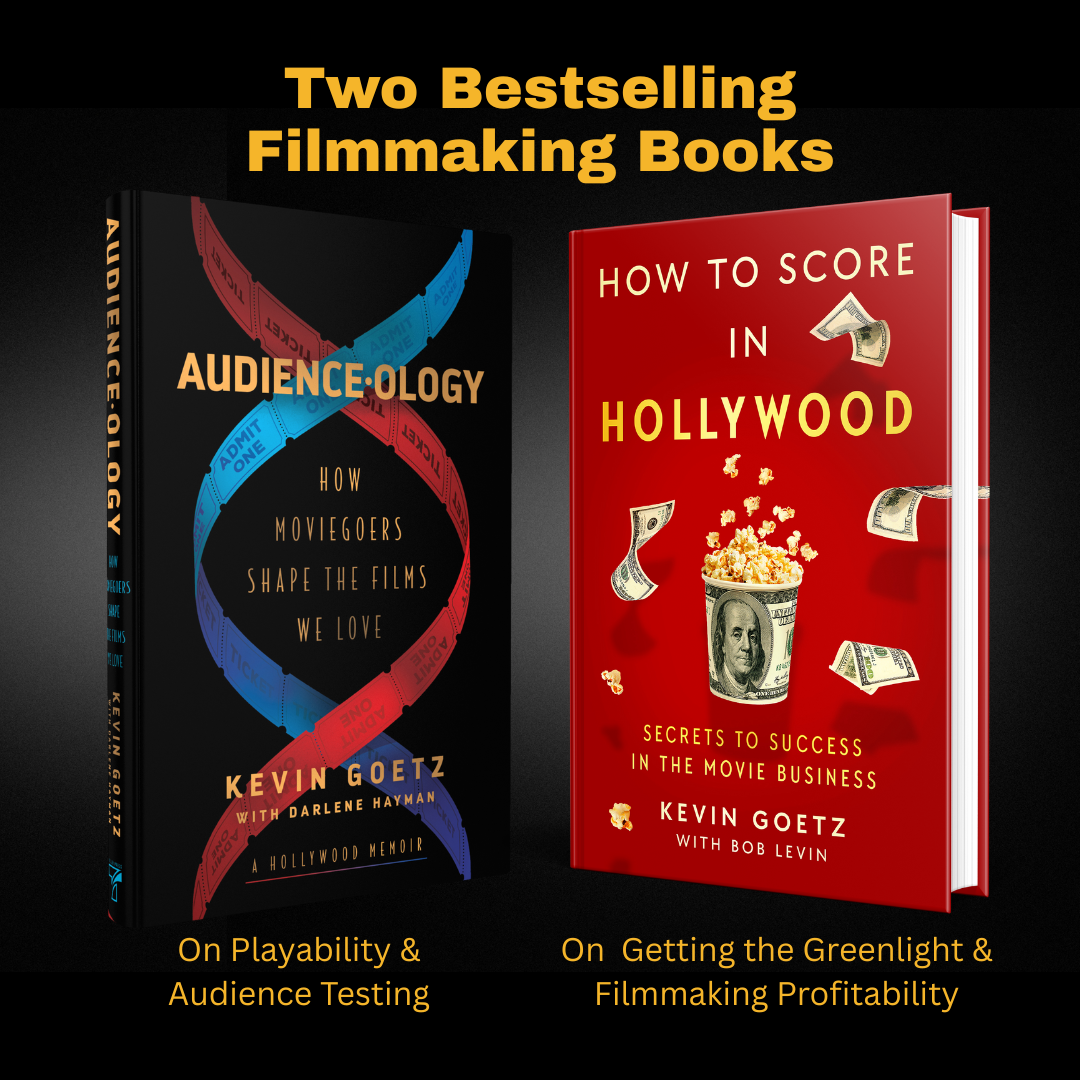
- Audience•ology – A definitive, behind-the-scenes look at how studios test films, interpret audience feedback, and make high-stakes creative decisions before release.
- How to Score in Hollywood – A practical guide to building commercially successful movies, showing how audience insight drives development, marketing, and profitability from script to screen.
Podcast: Don’t Kill the Messenger
Candid conversations with filmmakers, executives, and creatives about storytelling, testing, and the realities of making movies in today’s marketplace.
Prepared educational materials—including case studies, frameworks, and real-world examples—designed for film students, educators, and emerging filmmakers to understand how audience insight fits into the moviemaking process.
Follow Kevin:
Instagram, Facebook, X, TikTok, YouTube, Substack, LinkedIn