Key Takeaways from Don’t Kill the Messenger Podcast with Kevin Goetz
For three decades, Stacey Sher has successfully paired independent filmmaking with mainstream success, producing culture-defining films that changed Hollywood’s landscape forever. The two-time Academy Award-nominated producer behind Pulp Fiction, Django Unchained, Out of Sight, Erin Brockovich, Get Shorty, Reality Bites, Man on the Moon, and The Hateful Eight has demonstrated an ability to identify material others overlook and transform it into cinematic gold. In a recent conversation on Kevin Goetz’s podcast “Don’t Kill the Messenger,” Sher shared her insights and unconventional strategies that have made her one of Hollywood’s most influential producers.
Lessons from a Family Crisis: How Personal Adversity Shaped Professional Vision
One of the most personal aspects of Sher’s story is how a personal crisis during her early career became the foundation for her unique perspective on Hollywood hierarchies and storytelling choices. While working her way up in the industry, she concealed a profound family situation that would reshape her worldview:
“The first three years of my career after I finished grad school was kind of fibbing to Lynda and Debra, because I left a little bit early to go visit him. So I learned how to smuggle in a corn beef sandwich from Nate ‘n Al’s into prison.”
Her stepfather was “the biggest bookmaker on the East Coast,” and some of the lessons she learned from his imprisonment taught her to navigate Hollywood’s social dynamics while dealing with profound personal stress. The experience taught her invaluable lessons about loyalty and authenticity:
It definitely impacted causes I got involved in. Things I got involved in looking at people through a different lens. And I would say that it also really informed how I never really got too caught up in the Hollywoodness of it because I also went through a situation where people I was very close with and close with our family kind of turned their back on us.
This early lesson about seeing people’s true character under pressure would inform her later choices about the stories she wanted to tell and the collaborators she trusted.
Finding Great Material Through Unconventional Methods: The “Filming in the Future” Strategy
While most executives focused on high-profile submissions, Sher developed a unique strategy for finding overlooked gems. Her mentor, Lynda Obst, taught her to scour industry trade publications for an unlikely source of creative intelligence:
Lynda taught me to look at in Variety and the Hollywood Reporter, there used to be these columns that were called Filming in the Future in the US or filming in the Future outside the US. And they were really there for crew members to figure out and for below the line agents to try and get crew on, I would read them and kind of scour if there was really good cast and I had never heard of the writer or the director, I would get the script.
The logic was brilliant: if established actors were willing to work for scale with unknown filmmakers, there had to be something special in the material. Sher recalls, “If it attracted that level of talent, then there’s gotta be something there with the creative DNA. That’s right. And so Reservoir Dogs was one of those scripts.”
This approach led directly to one of the most important discoveries of her career, and her first encounter with Quentin Tarantino. The method revealed a fundamental truth about the industry: the most exciting projects often exist outside the traditional development pipeline.
Warren Beatty’s Career-Defining Question: The Commitment Philosophy
At 26, while working in post-production on The Fisher King, Sher received advice that would reshape her entire philosophy about project selection. Warren Beatty asked her a deceptively simple question that cut to the heart of producer responsibility:
Warren Beatty asked me a question that changed the way I thought about movies forever. And I was 26 years old. We were in post on The Fisher King and he asked, what kind of movies do you wanna make? And I was so nervous. I was sitting here with Warren Beatty and I said, I wanna make various movies. And he said, do you wanna have various children or marry various men? Because that’s the same commitment you need to have to the movies that you make.
This advice crystallized Sher’s approach to filmmaking, teaching her that each project deserves total commitment, not just a professional obligation. The metaphor proved prophetic; her films became deeply personal expressions rather than mere commercial products. This philosophy would guide every subsequent project choice, from Pulp Fiction to her current work on Colleen Hoover’s Verity.
The Birth of Jersey Films and Creative Freedom: The Discretionary Fund Innovation
When Sher joined Danny DeVito and Michael Shamberg at Jersey Films, they created a revolutionary approach to development that gave them unprecedented creative freedom. The discretionary fund became their secret weapon for betting on unproven talent:
Jersey Films had a thing called a discretionary fund and it was a development fund to acquire things. We made our blind deal with Quentin in our discretionary fund. We paid for the life rights and the first and the drafts of Erin Brockovich through the Discretionary Fund. We made a tiny little movie called Camp that we produced with killer films that we paid for the music and the staging through the discretionary fund.
This fund allowed them to take risks that studios wouldn’t approve, including making a deal with Quentin Tarantino before he had directed a single frame: “We began the process of making a blind deal for him to write his second movie before he directed a frame of film of Reservoir Dogs.” The discretionary fund represented more than just money, it was creative independence, allowing them to follow their instincts without studio oversight.
Hollywood’s Most Beloved Collaborators: The Power of Authentic Relationships
Sher’s insights about working with industry legends reveal her understanding that filmmaking success depends on genuine human connections. Her feelings about Steven Soderbergh capture her criteria for ideal creative partnerships:
“The best on the planet. Love him. He’s as kind as he is smart and talented. He has a saying, which is repeat business and treat people well.”
This philosophy of “repeat business” reflects a long-term approach to filmmaking relationships that prioritizes trust and mutual respect over single-project success, but it’s her account of Hillary Swank that shows the kind of artist collaboration that makes Sher’s films resonate beyond their commercial appeal:
A fighter, fought to get Freedom Writers made. Love her. partnered with us the day after she won her second Oscar. And that’s how we got that movie financed. Swand said, ‘I’m gonna use the cachet I have now to help us get this movie made.’
Django Unchained and Controversial Testing: When Authentic Material Transcends Demographics
Perhaps no story better illustrates Sher’s understanding of audience psychology than the testing of Django Unchained. The film’s controversial subject matter created anxiety within the studio about audience reception, leading to an extensive testing campaign that revealed something remarkable:
“The movie was very controversial in black Hollywood, and I think that was really hard for Reggie Hudlin, who I produced the movie with, because he really always understood this was a superhero story. It was a fairytale about rescuing a princess and a superhero story about literally and metaphorically blowing up the institution of slavery.”
The testing results defied all expectations:
So we have these screenings. One is, and you’ll remember, they’re all in New York. One is 50% white, 50% African American. Then there’s an all white screening and an all African American screening. The movie played identical. Then Harvey was nervous that we wouldn’t play in the South and that white people were gonna hate the movie. So in the middle of sending somebody down, we were going to screen in Athens, Georgia. In the middle of the person being on the way with the print to Athens, Georgia, Harvey decided that that was too much of a college town and it wouldn’t be the right sample. And literally, I feel like somewhere in rural Arkansas or Mississippi, it was like, for all intents and purposes, a klan town and the movie still tested the same and tested as high.
This experience reinforced Sher’s belief that authentic storytelling can transcend demographic boundaries when executed with conviction and clarity of purpose.
The Taste Development Method: How Reading 30 Scripts Built a Career
Sher’s ability to spot great material didn’t emerge overnight, it was forged through an almost obsessive commitment to script reading during her early career. Her mentor, Lynda Obst, created a rigorous training program that would shape Sher’s entire approach to development. The system was demanding but effective:
“One of the things that Lynda Obst had me do, there are three things that I really, really have to credit her with. One, when I did coverage, which was short coverage, and sometimes I would read, often I would read 30 scripts a weekend because that’s how much spec material was out there.”
The crucial element wasn’t just volume; it was the analytical framework Obst demanded:
“The great thing she would make me do was what’s the best version of this movie? And it was a mental test, and it was who would direct it? Who could star in it? What’s it like? What’s the genre, what’s the shape of it? And that rigor I think has served me to today.”
The Sher Approach: Where Personal Experience Meets Professional Excellence
What emerges from this conversation is a producer whose methodology has grown organically from lived experience. Sher’s approach to filmmaking reflects that of someone who has learned to transform personal adversity into professional insight. Her family crisis during her early career taught her about loyalty, authenticity, and the importance of seeing people clearly, lessons that would inform every subsequent project choice.
Her unconventional methods for finding material, like the “Filming in the Future” strategy, show how creative intelligence gathering can reveal opportunities others miss entirely. This approach to discovery, combined with Warren Beatty’s advice about treating films like family members, created a producer who commits fully to each project.
Sher’s repeated collaborations with directors like Soderbergh and Tarantino prove that the film business ultimately rewards consistency and trust over time. Sher’s career demonstrates that producing films with cultural impact requires more than good taste, it demands systematic approaches to development, unwavering commitment to material, and the courage to support stories others might not understand. Her collaboration with visionary directors like Tarantino and Soderbergh shows how producers can create commercially successful films while preserving artistic vision.
Her upcoming projects, including the Colleen Hoover adaptation Verity starring Anne Hathaway and Dakota Johnson, suggest that Sher continues to evolve with changing audience tastes while maintaining the core principles that have guided her extraordinary career.
The conversation between Stacey Sher and Kevin Goetz on “Don’t Kill the Messenger” offers rare insight into the mind of a producer who has consistently chosen material that challenges audiences while entertaining them. For anyone serious about understanding how great films get made, it’s essential listening that reveals the intersection of business acumen, creative instinct, and personal conviction that defines lasting cinema.
As the industry faces new challenges and opportunities, her approach offers a proven template for producing films that don’t just succeed commercially but contribute meaningfully to the cultural conversation. Movies that, as her career demonstrates, can indeed change the culture itself.
For more information about Kevin Goetz:
Want to go deeper on audience insight and why it matters in today’s movie business?
Explore Audience360—Kevin Goetz’s hub for books, conversations, and tools that show how audience research shapes what gets made, marketed, and remembered.
Books
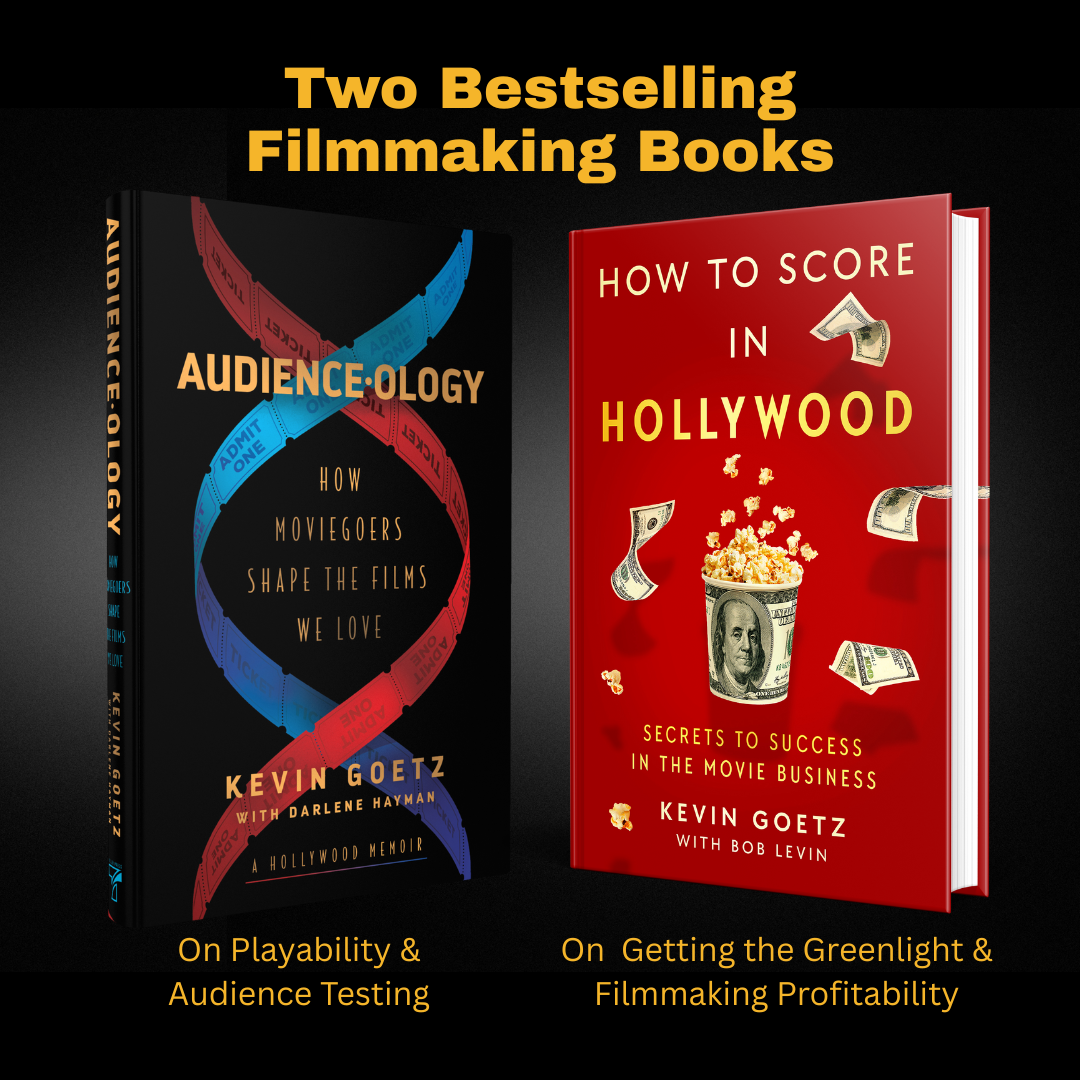
- Audience•ology – A definitive, behind-the-scenes look at how studios test films, interpret audience feedback, and make high-stakes creative decisions before release.
- How to Score in Hollywood – A practical guide to building commercially successful movies, showing how audience insight drives development, marketing, and profitability from script to screen.
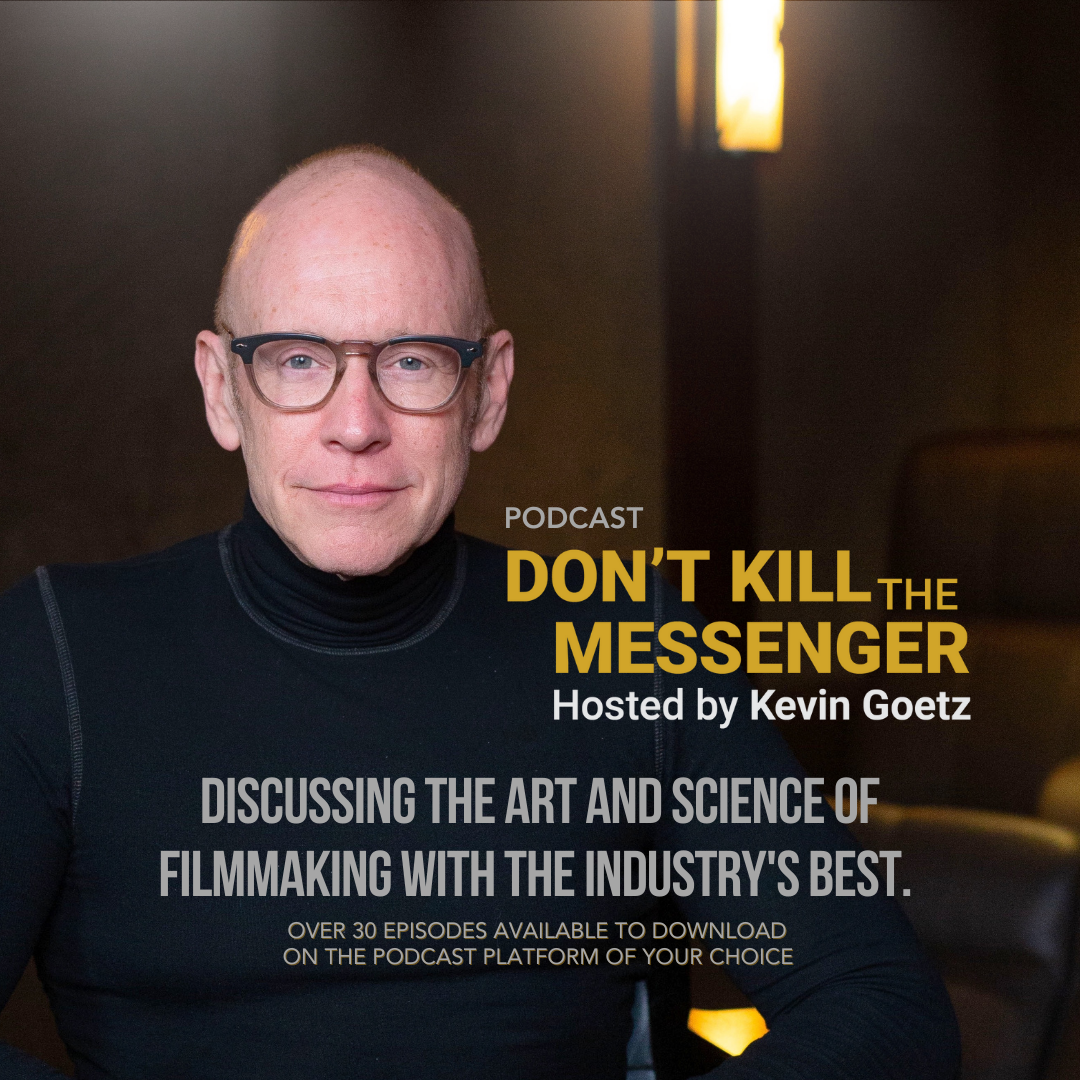
Podcast: Don’t Kill the Messenger
Candid conversations with filmmakers, executives, and creatives about storytelling, testing, and the realities of making movies in today’s marketplace.
Prepared educational materials—including case studies, frameworks, and real-world examples—designed for film students, educators, and emerging filmmakers to understand how audience insight fits into the moviemaking process.
Follow Kevin:
Instagram, Facebook, X, TikTok, YouTube, Substack, LinkedIn