Key Takeaways from Don’t Kill the Messenger Podcast with Kevin Goetz
Hollywood runs on a paradox. The film industry needs both artistic vision and commercial success, but these forces often seem to pull in opposite directions. A film industry analyst and an audience research pioneer are proving that these goals don't have to conflict.
In a recent conversation on Kevin Goetz's podcast Don't Kill the Messenger, Stephen Follows revealed insights from his groundbreaking digital book Greenlight Signals, which analyzed over 10,000 films and 4 million audience responses using data from existing reviews, ratings, and comments across the internet. Kevin's new book, How to Score in Hollywood, approaches the same challenge from a different angle through first-party audience research. Their conversation offers practical insights into what separates profitable films from financial disasters.
The Unsolvable Art Form
Stephen Follows brings a unique perspective to film analysis. He’s not just a data analyst but a filmmaker who started out producing short films. This combination helped shape his philosophy:
“One of the things I love about film is that it’s sort of unsolvable. It’s not like checkers, where you can calculate the best possible move. There is no one single formula. And even if there were, we would all smash it to bits in the first six months, and it wouldn’t work. So what I love is that we have to keep thinking and re-imagining, but at the same time, the audiences are similar. We’re all humans. We all want stories, we all have the same sort of feelings.”
Kevin Goetz agrees completely, adding his own perspective from decades of audience testing:
“The art is what I keep coming back to. It’s an art form. And so we’re playing in dangerous territory for people who are purists and just working with that part of the brain. But we are not trying to impede, interrupt, or usurp your art. We’re trying to help you make money doing what you love to do.”
Both men emphasize they’re not trying to replace artistic vision with spreadsheets. Instead, they’re helping filmmakers understand the commercial landscape, enabling them to make informed decisions.
The Eye-Opening Discovery
Stephen’s journey into film data analysis began with a favor for a producer friend who needed help with a business plan. What started as a research project became a career-defining revelation:
“He was a producer putting together a package. He knew I was number-literate and interested in doing this, and he said, Can you come and help me make a credible case for this movie? So I read the script and I started gathering data on all sorts of similar movies. And I kept proving that all the films I looked at lost money.”
Stephen assumed he’d made an error and went back repeatedly to check his calculations. But eventually reality sank in. The comparable films had all lost money. When he presented his findings, the response was unexpected:
“I sat down with him and I said, Look, I can’t explain why, but all of the films that are similar to yours have lost money. And he said, Yeah, I know I’m still gonna make mine. And I was like, oh, that’s why they lost money. Because people are making them for passion reasons, certainly on the lower budgets, and they’re not listening to the data.”
Kevin Goetz reinforced this, adding:
In any industry that you are driven by, the driving force of money is never a good idea. It is just not a good motivating factor for success. You have to have the passion and the goods behind it. But again, my theory is that why wouldn’t you try to make money each and every time out so that you could make another one, if for no other reason?
The Producer Experience Paradox
One of Stephen’s most counterintuitive findings came from research he conducted with Bruce Nash, who runs the website The Numbers. They partnered with the American Film Market to study whether producer experience correlates with film profitability:
“We looked at the correlation between the number of films a producer had made in the past and the chances of their next film being profitable. Because what you’d expect to see is experience equals better outcomes. And we found no correlation or even a slightly negative correlation.”
The findings were so unexpected that Stephen worried about publishing them. They told the American Film Market they’d proven that experience means nothing when it comes to profitability. Unlike other professions where poor performance has immediate consequences, failed producers often simply move to different investors.
Data Literacy and Hollywood
The conversation turned to whether filmmakers today are more open to using data. Stephen’s view was mixed:
“Honestly, I think they think they are. I’m not sure they actually are because I think that most of the people in the film industry are there for reasons in large part to do with passion, whether it’s art or passion for a story or because of a lifestyle.”
The influence of streamers and Silicon Valley over the past decade has increased awareness of data-driven decision-making. Stephen acknowledged this:
“We all do need to be far more data literate. But I would say that the core of being a film professional is about creating work that moves people, stories that move people.”
Kevin Goetz emphasized that the audience provides the ultimate accountability:
“The audience doesn’t care about any of this stuff. When it comes to the theater or watching it on TV, they’re ruthless. They’ll turn it off, they won’t buy it, they won’t recommend it. Or if you make something that moves people, they’ll tell everyone they know, they’ll buy it again.”
One of Kevin’s most thought-provoking statements came when discussing his research:
“Somebody asked me the other day in an article promoting the book, Are you ever wrong in your assessment of movies? I said, I’m wrong every day. I’m always wrong. The audience, on the other hand, is never wrong. And I mean that because all the audience is doing is giving you their opinions, their unfettered opinions based on what they’re seeing.”
Stephen added:
“If you’re genuinely trying to make a good piece of art, you’re trying to make a responsible business decision, you’re trying to make a sustainable career with people who are gonna trust you, you absolutely should listen to it. The questions that you really want to ask is not, Do you think this will make money, but what evidence would change your mind about the investment?”
Data as Weather Forecast
When Kevin asked about the biggest misunderstanding filmmakers have about data, Stephen’s answer was direct:
“They think it’s prescriptive and it’s not. It’s just the weather forecast. And that means two things. Number one, it means that it might be wrong, but also it means that even if 19 out of 20 things have failed, first of all, not all of them failed. But also everything is based on the past performance. Pirates don’t work until Pirates of the Caribbean. Historical films don’t work until Gladiator.”
Stephen elaborated on why understanding expectations matters:
I think the question to ask is what will your audience be expecting from your film? And then part two, what are you gonna do with that expectation? If they’re turning up to a western, you’ve titled it a certain thing, you know the color of the poster. Based on the information the audience are gonna get, they’re going to expect this kind of journey. Secondly, what are you going to do with those expectations?
Stephen used the example of Danny Boyle’s Sunshine, a film with horror elements that was marketed as big-budget science fiction. The result was audiences feeling mis-sold, even though the film itself might have worked with proper positioning.
First-Party Versus Secondary Data
This discussion highlighted the complementary nature of Kevin and Stephen’s approaches. Kevin explained:
“This is why my book focuses on the pre-greenlight stage. What you’re referring to is marketability, which very few filmmakers have any control over. So the difference of our interpretations is really centered on using secondary data after the movie’s released, looking back on it. As opposed to stuff that I’m doing, which is more first-party data, talking to hundreds, thousands, I don’t know, could be in the millions of moviegoers over nearly four decades.”
Kevin’s work involves testing concepts and films with audiences before release. Stephen’s research analyzes patterns across thousands of completed films using existing reviews and ratings. Both approaches provide value at different stages of the filmmaking process.
What Audiences Really Want
Stephen’s analysis revealed a gap between what audiences say they want and what they actually respond to:
“I think people will say they want things that are more complex than they actually want. When you ask people what do you want from a movie, they might give you a highfalutin answer. But if you look at their behavior, what they actually want is to be entertained and immersed and to live a life with somebody else.”
Kevin illustrated this with the iPhone analogy. If Steve Jobs had asked people what they wanted, they couldn’t have described a smartphone. But once they saw one, they immediately wanted it.
Genre as Emotional Shorthand
Both Kevin and Stephen work extensively with genre analysis. Stephen’s description captures the challenge:
“Genre is such a broken system that works in the sense that whenever you try and pick it up, it’s like sand between your fingers. And yet we all know what it is. So I think of genre as a shorthand to the emotional experience. What’s the difference between thriller and action? The lazy answer is the budget. The real answer is to do with emotional danger. I think a thriller is unsettling, whereas an action film doesn’t necessarily have to be.”
The key insight is that genre matters most for packaging and marketing. Once audiences are in the theater, you can take them on nuanced journeys. But if you promise them something through genre signals and then don’t deliver, you’ve created a problem.
The conversation’s deep dive into horror films revealed why this genre poses unique challenges. Stephen’s analysis found something surprising about average shot length:
“Obviously the shortest genre is action. But the longest was horror. When I initially did it, I was a bit surprised. And then I realized, that’s because you can’t see around the corner. You have to wait until that thing comes out. Horror is essentially about controlling everything the audience know and feel.”
Kevin shared insights from testing thousands of horror films. The most common problems are failing to declare the genre early enough and not including enough actual scares. When filmmakers describe their horror movie as “kind of a psychological thriller,” it’s usually code for “not very scary but intriguing.”
Elevated Genre
Kevin introduced the concept of elevated genre films:
“What I’m sensing is that what is working now in the theaters is elevated this or elevated that. It’s elevated horror, it’s elevated comedy, it’s elevated drama. It’s why Oppenheimer, for example, as a drama has a very underlying tension and intensity that elevates it.”
He added that films like M3GAN succeeded by adding humor to the horror formula. The question for any genre film is whether you’re delivering enough of the core experience.
Peak-End Theory
Stephen introduced a psychological concept with implications for filmmaking:
“There’s a theory called Peak-end theory, which is that the two bits that people remember most of an experience is the peak and the end. My theory is when those two align, when the ending is the peak, it creates an extra like the feeling squared. You look at movies like Argo, I think quite an average movie with a terrific ending went on to win Best Picture.”
Kevin discussed what he calls “zombie endings,” where films leave audiences hanging ambiguously. These rarely work because audiences need to feel pushed in a direction.
When discussing what makes endings satisfying, Stephen described a balance:
“Those two things can also be in conflict sometimes. But they have to resolve. You have to feel like there was a literal truth to it. It has to make sense, but it has to be an emotional truth to it as well. It has to feel like it works.”
Every Movie Should Make Money
Kevin’s theory provided a framework for the entire conversation. He believes every movie, if made and marketed for the right price, should make money. This philosophy doesn’t mean avoiding niche subjects. It means accurately sizing the market and budgeting accordingly.
One of Stephen’s key findings was the distinction between productive mystery and problematic confusion:
“There’s a big difference between mystery and confusion. We like mystery. Not knowing is fine, but confusion is uncomfortable. And even in a horror film, confusion can’t last a long time.”
Kevin calls this “intrigue versus frustration.” Good confusion makes audiences lean forward. Bad confusion makes them check their phones.
Stephen emphasized that maintaining a consistent tone doesn’t mean painting with a single color:
“Think about when you’re listening to a randomized playlist on Spotify. If it suddenly has some other tune that you weren’t expecting, it will feel incredibly discordant. Even if it’s a tune you like. It’s the same with a movie because fundamentally, one of the biggest things I’ve found across all genres is about immersion.”
Kevin felt that filmmakers should establish tone as early as possible to give audiences permission to respond appropriately.
The Future of Film Data
The conversation between Kevin Goetz and Stephen Follows demonstrates that data and artistry aren’t opposed forces. They’re complementary tools for understanding what resonates with audiences.
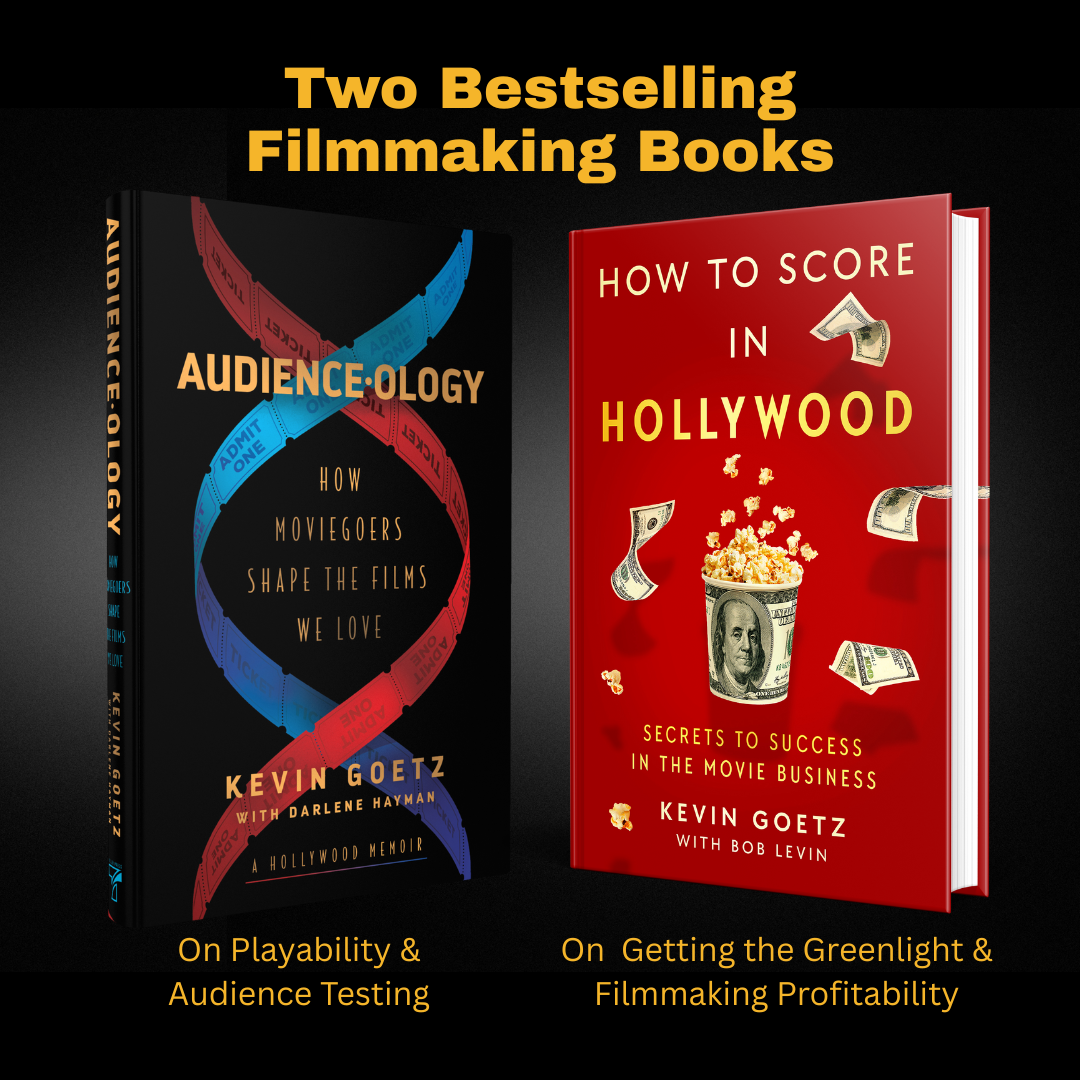
Stephen’s Greenlight Signals provides filmmakers with patterns distilled from thousands of films using secondary data. Kevin’s How to Score in Hollywood offers practical guidance for testing concepts and films with real audiences before significant resources are committed. Together, these approaches give filmmakers better ability to make informed decisions.
The key is remembering that data provides weather forecasts, not prescriptions. Past performance informs but doesn’t dictate future success. Genre conventions matter but can be subverted thoughtfully. Audiences want to be entertained and immersed, but the specific form that takes can vary.
Both men emphasize that ignoring audiences entirely usually leads to financial failure. You don’t have to follow every data point or test recommendation. But understanding what audiences expect and what patterns have emerged across thousands of films provides useful context for creative decisions.
As Kevin noted at the end of their conversation, he and Stephen are approaching the same mission from complementary angles. Both want to help filmmakers make movies that connect with audiences and generate enough profit to enable more filmmaking.
The full conversation is available now on Don’t Kill the Messenger. For more information about Stephen Follows and his research, visit stephenfollows.com. Kevin Goetz’s books, Audienceology and his upcoming How to Score in Hollywood, are available on Amazon and at kevingoetz360.com.
For more information about Kevin Goetz:
Want to go deeper on audience insight and why it matters in today’s movie business?
Explore Audience360—Kevin Goetz’s hub for books, conversations, and tools that show how audience research shapes what gets made, marketed, and remembered.
Books
- Audience•ology – A definitive, behind-the-scenes look at how studios test films, interpret audience feedback, and make high-stakes creative decisions before release.
- How to Score in Hollywood – A practical guide to building commercially successful movies, showing how audience insight drives development, marketing, and profitability from script to screen.
Podcast: Don’t Kill the Messenger
Candid conversations with filmmakers, executives, and creatives about storytelling, testing, and the realities of making movies in today’s marketplace.
Prepared educational materials—including case studies, frameworks, and real-world examples—designed for film students, educators, and emerging filmmakers to understand how audience insight fits into the moviemaking process.
Follow Kevin:
Instagram, Facebook, X, TikTok, YouTube, Substack, LinkedIn